Supreme Court declines case about copyrights for material created by AI

The U.S. Supreme Court declined on March 2 to take up a case dealing with whether art created by artificial intelligence (AI) may be copyrighted under U.S. law. The justices denied the petition in Thaler v. Perlmutter in an unsigned order. The court did not explain its decision. No justices dissented. The respondent, Shira Perlmutter, is the U.S. Register of Copyrights. The petitioner, Stephen Thaler, a computer scientist from Missouri, sought a copyright registration in 2018 for “A Recent Entrance to Paradise,” an example of visual art he said his AI system called the Creativity Machine had created. The work … Continue reading Supreme Court declines case about copyrights for material created by AI


Supreme Court upholds sole GOP-held congressional district in New York City for 2026 elections

The U.S. Supreme Court on March 2 ruled that the boundaries of the only Republican-held congressional district in New York City do not need to be adjusted in time for the approaching midterm elections in November. The justices blocked a … Continue reading Supreme Court upholds sole GOP-held congressional district in New York City for 2026 elections

Supreme Court rules 5–4 that USPS can’t be sued for employees intentionally not delivering mail

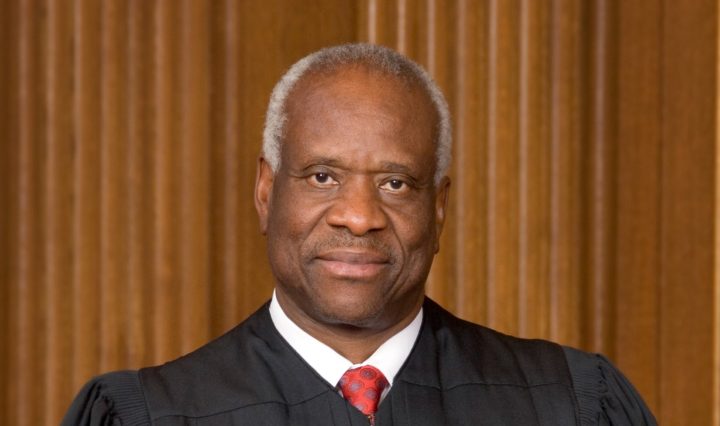
The U.S. Supreme Court ruled 5–4 on Feb. 24 that Americans may not sue the U.S. Postal Service (USPS) when its employees intentionally fail to deliver mail. Justice Clarence Thomas wrote the majority opinion in USPS v. Konan, ruling against … Continue reading Supreme Court rules 5–4 that USPS can’t be sued for employees intentionally not delivering mail

Supreme Court mulls corporate claims about seized assets in Cuba

The Supreme Court on Feb. 23 grappled with two cases about U.S. business assets that Cuba’s communist government seized decades ago. The cases are Havana Docks Corp. v. Royal Caribbean Cruises and Exxon Mobil v. Corporacion Cimex, which the justices heard back-to-back in more than three hours of oral arguments. Both cases focus on the 1996 Cuban Liberty and Democratic Solidarity Act, created to pressure Cuba by penalizing companies “trafficking” in property Cuba seized from U.S. interests. Also known as the Helms-Burton Act, the law allows U.S. citizens and companies to sue any person who traffics in, uses, or profits … Continue reading Supreme Court mulls corporate claims about seized assets in Cuba

Supreme Court to hear lawsuits over Americans’ seized assets in Cuba

The U.S. Supreme Court is poised to hear two cases on Feb. 23 about U.S. business assets that Cuba’s communist government seized decades ago. Both cases focus on the 1996 Cuban Liberty and Democratic Solidarity Act that was created to pressure Cuba by penalizing foreign companies “trafficking” in property that the Cuban regime seized from U.S. interests. Also known as the Helms-Burton Act, the law allows U.S. citizens and companies to sue any person who traffics in or uses confiscated property. Trafficking in the statute includes using or profiting from the confiscated property. The law defines “person” to include “any … Continue reading Supreme Court to hear lawsuits over Americans’ seized assets in Cuba