
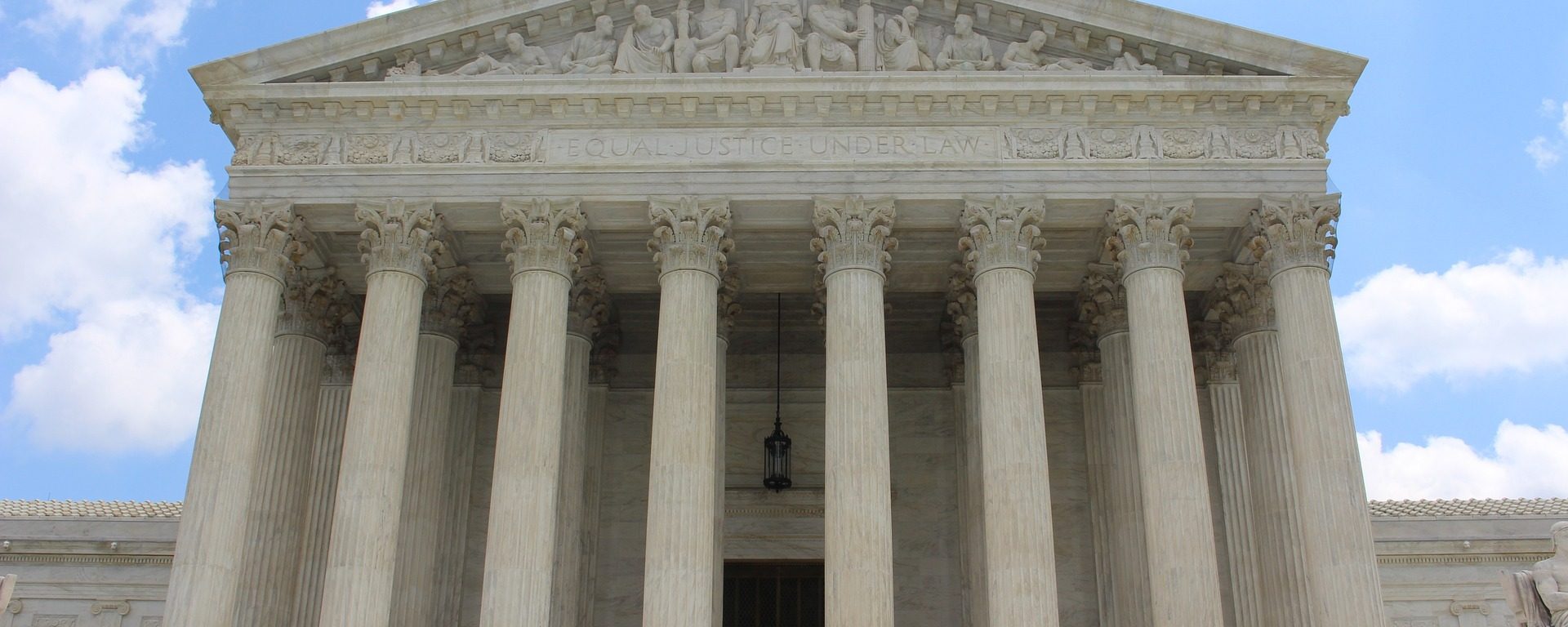

The U.S. Supreme Court denied a stay of execution for Alabama inmate Anthony Boyd late on Oct. 23, over the dissent of three justices.
The nation’s highest court declined Boyd’s request for a temporary reprieve in an unsigned order. The court did not explain its decision.
Justices Sonia Sotomayor, Elena Kagan, and Ketanji Brown Jackson filed a dissenting opinion, in which they said that the planned method of execution—nitrogen hypoxia—was cruel and unusual punishment forbidden by the U.S. Constitution’s Eighth Amendment.
The execution protocol requires that a gas mask be strapped over the condemned person’s face to replace breathable air with nitrogen gas, causing death within minutes.
Boyd, 54, was convicted of killing Gregory Huguley more than three decades ago after he failed to pay for $200 worth of cocaine. Prosecutors said the victim was doused in gasoline and set on fire.
Boyd has said he is innocent.
“I didn’t kill anybody. I didn’t participate in any killing,” he said during a conference call with reporters on Oct. 8.
Boyd said if he were to be executed, he would prefer that the act be accomplished by firing squad.
Boyd represented himself before the U.S. Supreme Court.
In a petition he filed with the court on Oct. 21, he argued that giving the Alabama governor authority to set execution dates violated the Alabama Constitution. In 2023, the Alabama Supreme Court amended appellate rules to allow the governor, “an executive officer who also holds the exclusive clemency power,” authority to set execution dates.
Boyd wrote that the change “displaced a judicial function long reserved to the courts” under a state law that provides that “the court shall … set the date of execution.”
Alabama Gov. Kay Ivey scheduled the execution for Oct. 23, and “no court has ever reviewed that procedure for constitutionality. Boyd’s life is now at stake under an executive act that the Alabama Constitution forbids,” according to the petition.
Boyd asked the U.S. Supreme Court to consider whether giving the power to set execution dates to the governor gives rise to a due process claim under a federal law known as Section 1983, which allows individuals to sue governments if they violate constitutional or statutory rights.
Boyd also asked the Supreme Court to decide if the transfer of authority to set execution dates to the governor violates the U.S. Constitution’s due process clause “by dismantling the State’s judicial safeguard and creating an unconstitutional fusion of executive and judicial powers.”
A federal district court previously denied Boyd’s motion for a preliminary injunction to halt the execution based on his Eighth Amendment challenge to the method of execution. The U.S. Court of Appeals for the Eleventh Circuit affirmed the district court’s ruling on Oct. 20.
Gov. Ivey filed a reply brief on Oct. 21 opposing the stay request.
The lower courts were correct in denying the relief that Boyd requested, the brief said.
Specifically, the brief said the district court was correct in ruling that Boyd’s Section 1983 claim, which was brought in September 2025—eight months after the statute of limitations in Alabama had expired—could not be heard by the court.
Boyd had requested a meeting with Ivey to discuss his case, and the governor turned down the request.
Sotomayor said in her opinion dissenting from the U.S. Supreme Court’s denial of the stay of execution that there is “mounting and unbroken evidence” that the method is unconstitutional.
The Eighth Amendment “does not guarantee a prisoner a painless death,” she said, citing the high court’s 2019 decision in Bucklew v. Precythe. “But when a State introduces an experimental method of execution that superadds psychological terror as a necessary feature of its successful completion, courts should enforce the Eighth Amendment’s mandate against cruel and unusual punishment.
“Seven people have already been subjected to this cruel form of execution. The Court should not allow Boyd to become the eighth,” she said. Boyd sought the “barest form of mercy: to die by firing squad, which would kill him in seconds, rather than by a torturous suffocation lasting up to four minutes.”
Kagan and Jackson joined the dissent.
Boyd was pronounced dead at 6:33 p.m. local time on Oct. 23 after he was executed at the William C. Holman Correctional Facility in Atmore, Alabama.
The Associated Press contributed to this report.
This article by Matthew Vadum appeared Oct. 23, 2025, in The Epoch Times.