
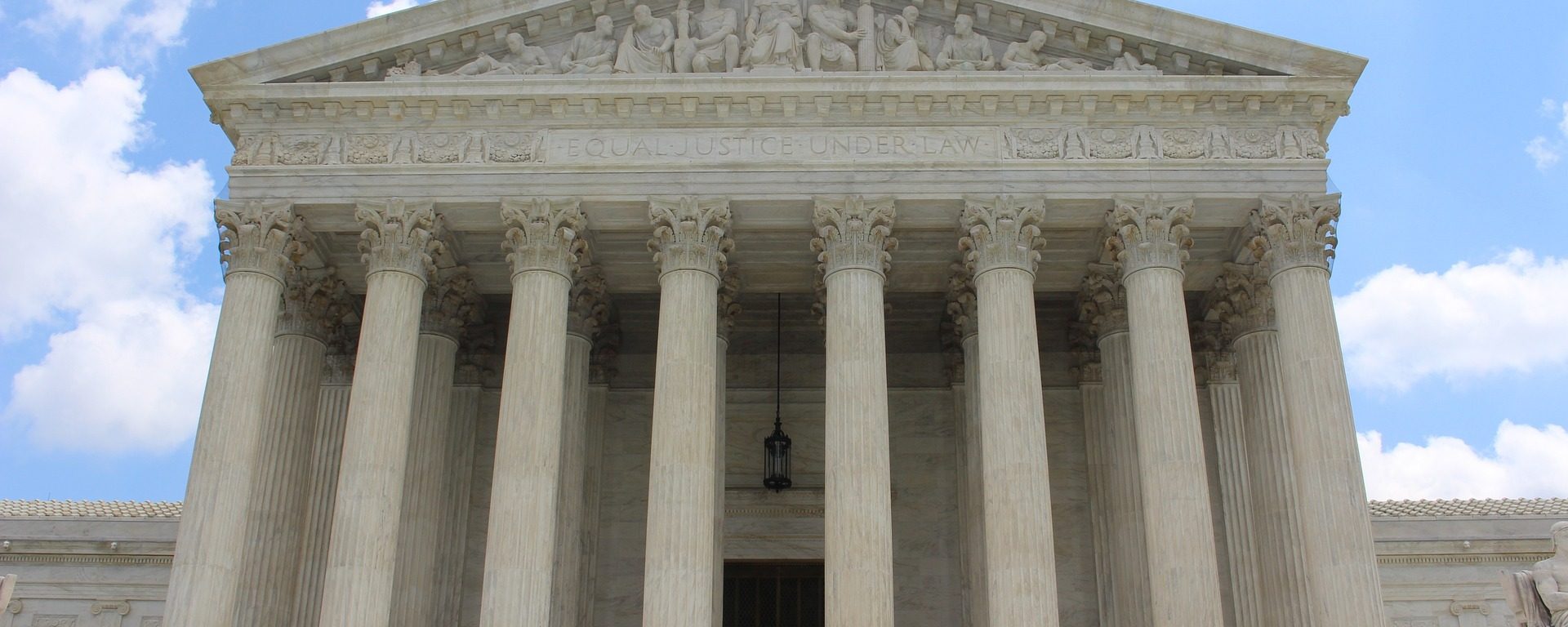

The Supreme Court on Oct. 20 agreed to consider whether a federal law barring illegal drug users from possessing firearms is constitutional.
Hunter Biden was convicted under the same law in June 2024, but his father, then-President Joe Biden, pardoned him in December 2024.
The justices granted the petition in United States v. Hemani without comment in an unsigned order. No justices dissented.
The respondent, Ali Danial Hemani, is a dual citizen of the United States and Pakistan, according to the government’s petition.
The petition describes Hemani as “a drug dealer who uses illegal drugs.” The FBI obtained a search warrant to search his home and found a Glock 9mm pistol, 60 grams of marijuana, and 4.7 grams of cocaine.
At one point in the case, the U.S. Court of Appeals for the Fifth Circuit held that the Second Amendment prevents Congress from restricting the possession of firearms by habitual users of illegal drugs.
“The court’s decision invalidates an important federal statute in the vast majority of its applications and exacerbates a multi-sided circuit conflict,” the petition states, requesting the highest court to hear the case and reverse the decision.
The Fifth Circuit threw out the felony conviction against Hemani, but held that the ban could still apply to people accused of being intoxicated by drugs and armed at the same time.
The Trump administration is generally supportive of Second Amendment rights but argues that the ban applying to drug users is a reasonable restriction.
Attorneys for Hemani say the ban puts millions of Americans at risk because one-fifth of Americans have tried marijuana, according to government data. About half of U.S. states have legalized the recreational use of marijuana, but it remains illegal under federal law.
The federal government is defending Section 922(g)(3) of Title 18 of the U.S. Code, which forbids those who unlawfully use controlled substances from possessing firearms.
There are “compelling legal and historical reasons to uphold” the section, which disqualifies only habitual illegal drug users from having firearms, the petition states. The prohibition “imposes a limited, inherently temporary restriction—one which the individual can remove at any time simply by ceasing his unlawful drug use.”
“[The restriction is a more] modest, modern analogue of much harsher founding-era restrictions on habitual drunkards, and so it stands solidly within our Nation’s history and tradition of regulation,” the petition reads.
In 2022, the Supreme Court ruled in New York State Rifle and Pistol Association v. Bruen that firearms restrictions must have a historical analogue to be deemed constitutional.
However, in June 2024 the Supreme Court upheld Section 922(g)(8) of Title 18 of the U.S. Code, which bars people under domestic violence-related restraining orders from possessing firearms. The court upheld the federal law in an 8–1 vote.
The justices found in that case, United States v. Rahimi, that the Second Amendment is not violated when an individual is disarmed after a court has found him to pose a credible threat to the physical safety of another.
The government’s petition in the Hemani case states that habitual drug users in possession of firearms “present unique dangers to society—especially because they pose a grave risk of armed, hostile encounters with police officers while impaired.”
At least 32 states and territories have passed similar laws limiting the possession of firearms by drug addicts and drug users, the petition reads.
Hemani’s attorneys filed a brief urging the Supreme Court to not take up the case.
The indictment filed against Hemani in February 2023 alleged that in August 2022 Hemani was aware that he was an unlawful user of a controlled substance while he knowingly possessed a Glock 19 pistol.
“Mr. Hemani was not alleged to have been currently intoxicated when law enforcement found the Glock 19 at his home,” the brief states.
The government has acknowledged that there was no evidence that Hemani was intoxicated on marijuana when he was arrested or when he carried the weapon, the brief states.
Later the same month, Hemani moved to dismiss the indictment, arguing that Section 922(g)(3) was “unconstitutionally vague.” The federal district court granted the motion to dismiss in February 2024, which the government appealed to the Fifth Circuit.
In January, the Fifth Circuit upheld the lower court’s decision to dismiss the indictment.
The government has failed to show in this case that Section 922(g)(3) is “constitutional as applied to Mr. Hemani specifically and that this case is a proper procedural vehicle for this Court’s review,” the brief states.
The Supreme Court has not yet scheduled the oral argument in United States v. Hemani. A decision in the case is expected by the end of June 2026.
The Associated Press contributed to this report.
This article by Matthew Vadum appeared Oct. 20, 2025, in The Epoch Times.