
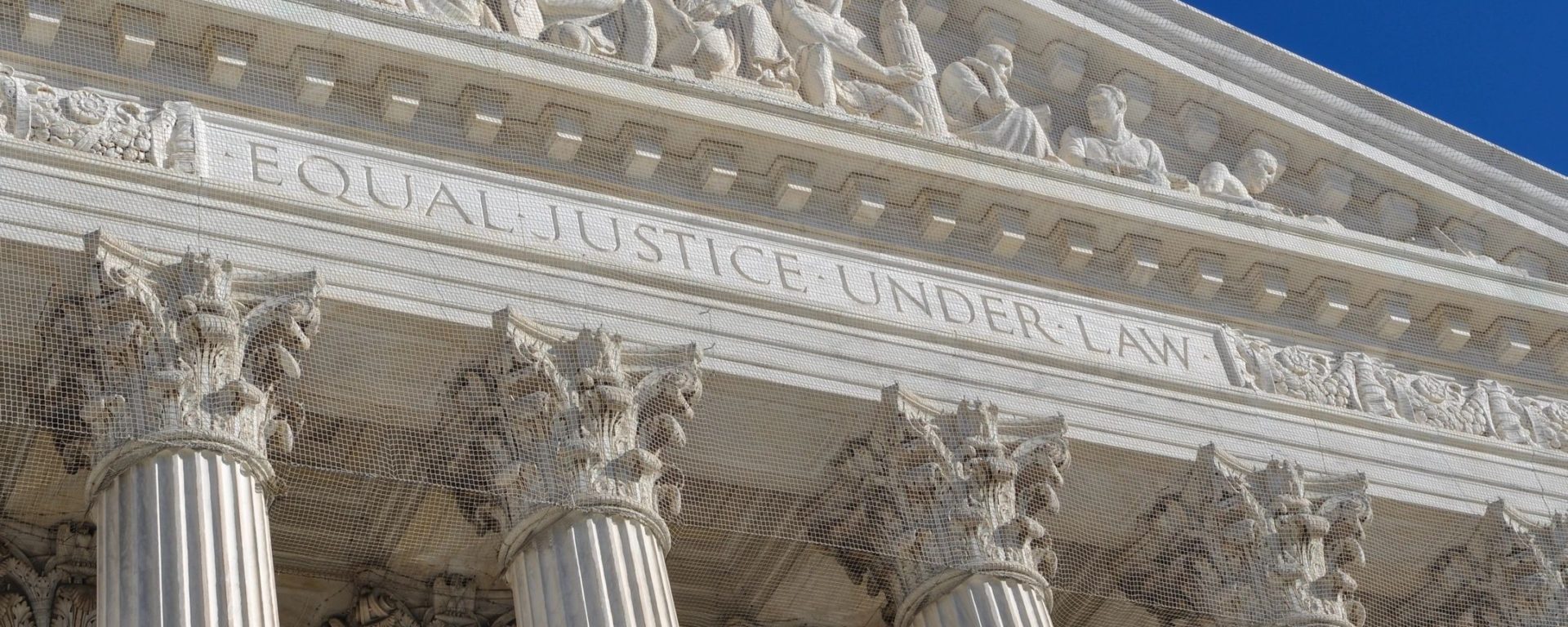

The Trump administration on Oct. 27 asked the U.S. Supreme Court to uphold the firing of the director of the U.S. Copyright Office, Shira Perlmutter.
The Copyright Office, a separate department of the Library of Congress, registers copyright claims, stores information about copyright ownership, gives information to the public, and helps Congress and other government offices with copyright-related matters.
The federal government’s emergency application seeks to uphold Perlmutter’s firing after the U.S. Court of Appeals for the District of Columbia Circuit ruled against the government earlier this year.
Perlmutter sued the Trump administration after she was fired in May, arguing that the termination—communicated via email—violated federal law.
“The administration’s attempts to remove Ms. Perlmutter as the Register of Copyrights are blatantly unlawful,” the lawsuit said. “Congress vested the Librarian of Congress—not the president—with the power to appoint and, therefore, to remove, the Register of Copyrights.”
President Donald Trump also fired Librarian of Congress Carla Hayden on May 8, two days before removing Perlmutter. Hayden did not challenge her dismissal. The president appointed Deputy Attorney General Todd Blanche as acting librarian—an appointment Perlmutter argues is unlawful because the Library of Congress is not an executive agency and is not governed by the Federal Vacancies Reform Act.
Perlmutter, who was appointed by Hayden in 2020, said Trump’s decision to install Blanche and his associates violated separation of powers principles and usurped Congress’s authority.
Perlmutter also alleges that Blanche’s designation of Department of Justice official Paul Perkins to assume her position had no legal basis.
Perlmutter’s lawsuit came nearly two weeks after the Copyright Office unveiled a report saying that some uses of copyrighted material to train generative artificial intelligence (AI) systems may require licensing under U.S. law. The report, issued under Perlmutter’s leadership, found that although some AI training could qualify as “fair use,” other training likely would not.
A federal district court declined to issue a preliminary injunction, but a divided panel of the D.C. Circuit Court granted an injunction, restoring Perlmutter to the office while the appeal plays out.
The circuit court held in its Sept. 10 ruling that Perlmutter’s removal was “likely unlawful.”
“The Librarian of Congress—not the President—is authorized by the statute to appoint the Register.”
“The President’s purported removal of the Legislative Branch’s chief advisor on copyright matters, based on the advice that she provided to Congress, is akin to the President trying to fire a federal judge’s law clerk.”
The advice the court referred to was Perlmutter’s release of a report on using copyrighted materials to train generative AI models.
The president “allegedly disagreed” with the recommendations in the report, the ruling said, and the following day—a Saturday—the White House informed Perlmutter that she was removed from her post “effective immediately.”
In a July 23 speech at a White House conference, Trump said he supports a “commonsense application” that does not require AI companies to pay for each item of copyrighted material that is used to train AI models.
“You can’t be expected to have a successful AI program when every single article, book, or anything else that you’ve read or studied, you’re supposed to pay for,” the president said. “We appreciate that, but just can’t do it—because it’s not doable.”
Solicitor General D. John Sauer wrote in the newly filed application that the Copyright Office “wields executive power by exercising ‘significant regulatory authority over copyrights’” and affects “a wide array of crucial intellectual-property issues.”
Despite precedent holding that the librarian and register are executive officers, the circuit court accepted Perlmutter’s argument that the positions are legislative officers because they are “housed within the Legislative Branch,” Sauer said.
“The Librarian and Register exercise powers that this Court has repeatedly classified as executive, such as the power to issue rules implementing a federal statute, to issue orders in administrative adjudications, and even to conduct foreign relations relating to copyright issues,” he said.
In previous cases, the D.C. Circuit recognized that the Library of Congress was part of the executive branch, “yet it held the opposite here, providing no plausible justification for its startling about-face,” Sauer said.
The application was addressed to Chief Justice John Roberts. He directed Perlmutter to respond to the application by 4 p.m. on Nov. 10.
Chase Smith contributed to this report.
This article by Matthew Vadum appeared Oct, 27, 2025, in The Epoch Times. It was updated Oct. 29, 2025.