
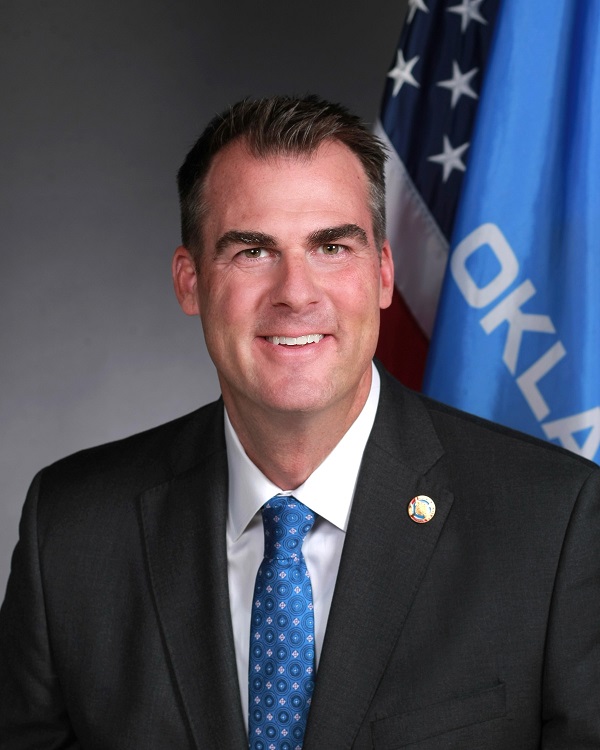

Oklahoma Gov. Kevin Stitt on Nov. 13 spared the life of Tremane Wood on his scheduled date of execution hours after the U.S. Supreme Court denied a death row reprieve.
The Republican governor granted clemency to Wood, 46, who was about to receive a lethal injection for the stabbing death of Ronnie Wipf, a 19-year-old farmworker killed during a robbery attempt at an Oklahoma City hotel in 2002.
The state’s Pardon and Parole Board voted 3–2 earlier this month to recommend Wood’s sentence be commuted.
Stitt’s decision, his second death-row commutation, converts the sentence to life in prison without the possibility of parole.
“After a thorough review of the facts and prayerful consideration, I have chosen to accept the Pardon and Parole Board’s recommendation to commute Tremane Wood’s sentence to life without parole,” Stitt said in a statement.
“This action reflects the same punishment his brother received for their murder of an innocent young man and ensures a severe punishment that keeps a violent offender off the streets forever,” the governor said.
Stitt’s new executive order states that Wood “shall not be eligible to apply for or be considered for a commutation, pardon, or parole for the remainder of his life.”
Wood’s lawyer, Amanda Bass Castro Alves, said she and her client’s legal team were “profoundly grateful” for Stitt’s action.
“This decision honors the wishes of Mr. Wipf’s family and the surviving victim, and we hope it allows them a measure of peace.”
The attorney said Wipf was raised in a Hutterite religious community in Montana and that Wood’s clemency bid was backed by Wipf’s family.
Oklahoma Attorney General Gentner Drummond expressed concern over the commutation.
“I am disappointed that the governor has granted clemency for this dangerous murderer, but respect that this was his decision to make,” Drummond said.
The commutation comes after Stitt granted clemency to death row inmate Julius Jones four years ago, and after turning away commutation recommendations in four other cases. Since Stitt became governor in January 2019, 16 prisoners have been executed in Oklahoma.
Earlier on Nov. 13, the nation’s highest court denied Wood’s emergency application to halt the approaching execution. The Supreme Court did not explain its decision.
Justice Ketanji Brown Jackson indicated she would have granted the requested stay. She did not say why.
Justice Neil Gorsuch did not participate in the court’s decision. He did not explain his recusal.
Wood’s attorney argued in a filing with the Supreme Court that Wood’s case was similar to that of Oklahoma inmate Richard Eugene Glossip, whose murder conviction the justices overturned in February.
“Like Glossip, this case involves a 2004 capital murder prosecution in Oklahoma County, Oklahoma,” the petition filed Oct. 30 stated.
Like Glossip, the petition argued, in Wood’s case prosecutors from the same county knowingly failed to correct “false testimony by cooperating witnesses about the extent of the benefits that the prosecutors had extended in exchange for their testimony against Mr. Wood.”
Drummond filed a reply brief on Nov. 7, opposing the petition.
Wood’s case “bears no resemblance” to Glossip’s in which the state “conceded that Glossip did not receive a fair trial,” the attorney general said.
The state “proved at a three-day evidentiary hearing that [Wood] did receive a fair trial.”
The courts correctly denied Wood’s claims “based on the uncontroverted evidence that prosecutors had no undisclosed agreements with any witness,” Drummond said.
The Associated Press contributed to this report.
This article by Matthew Vadum appeared Nov. 13, 2025, in The Epoch Times.
Photo: Oklahoma Gov. Kevin Stitt, a Republican