

The Trump administration asked the U.S. Supreme Court late on Nov. 7 to halt a judge’s order that requires the federal government to fully fund food stamps in November after a federal appeals court declined to do so.
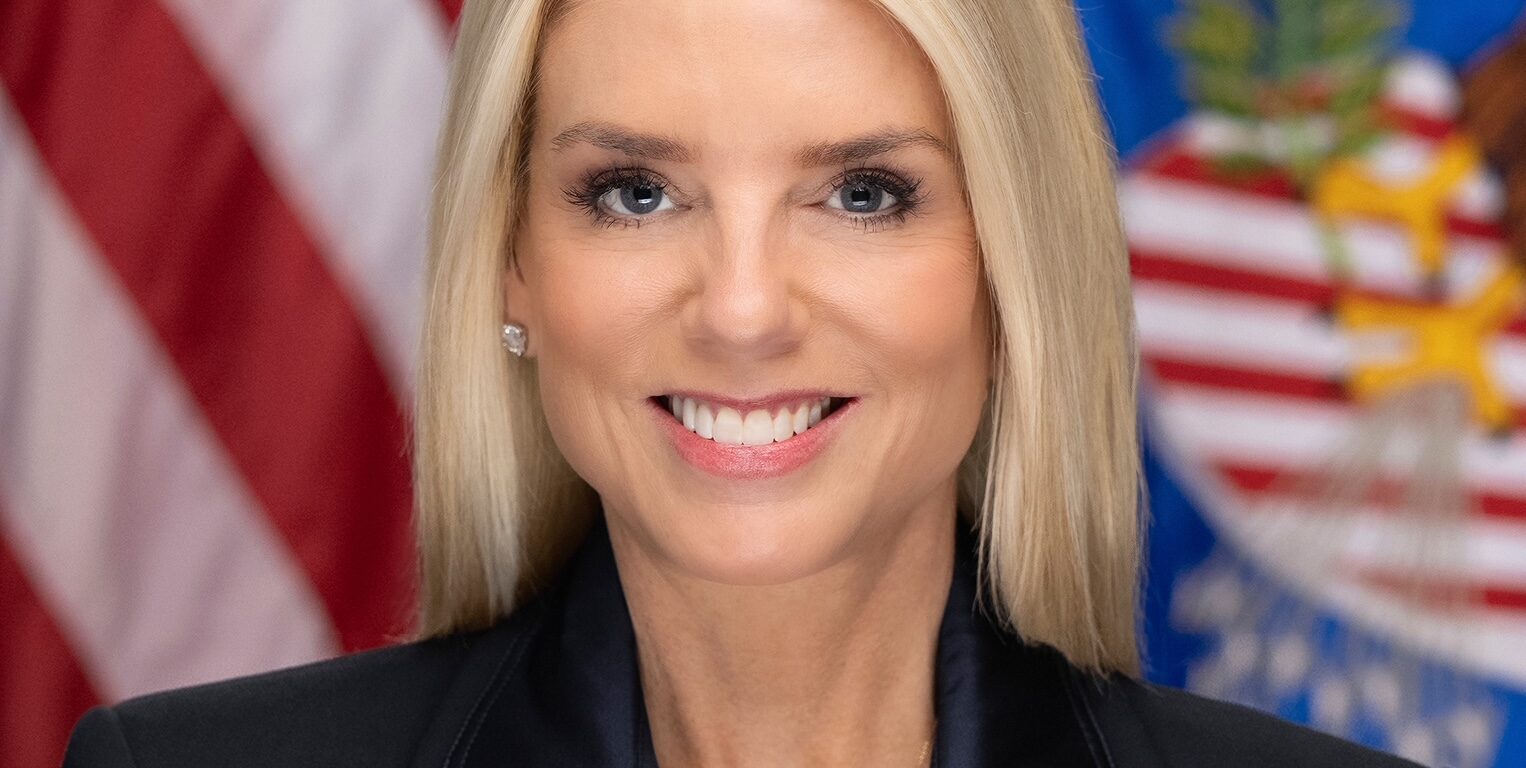
Attorney General Pam Bondi confirmed the emergency application to the nation’s highest court in a post on X.
Bondi described the judge’s order that required funding of the program as “judicial activism at its worst.”
“A single district court in Rhode Island should not be able to seize center stage in the shutdown, seek to upend political negotiations that could produce swift political solutions for SNAP and other programs, and dictate its own preferences for how scarce federal funds should be spent,” Bondi said.
The formal name of the food stamp program is the Supplemental Nutrition Assistance Program (SNAP).
The Supreme Court application came after a federal appeals court declined earlier on Nov. 7 to issue an emergency stay pausing a judge’s order that requires the federal government to fully fund food stamps in November.
At the same time, the appeals court indicated it will take another look at the government’s stay request soon.
The U.S. Court of Appeals for the First Circuit ruled the same day as the Trump administration filed an emergency motion seeking a stay of the federal district judge’s order.
In the new order, issued after business hours, the First Circuit said the government’s request for an administrative stay, which gives judges more time to consider an urgent case, was denied.
However, the circuit court said the government’s motion for a stay while it appeals the district court’s order “remains pending.”
“We intend to issue a decision on that motion as quickly as possible,” the order said.
The motion comes after Judge John McConnell Jr. of the U.S. District Court for the District of Rhode Island directed the U.S. Department of Agriculture (USDA) to pay states the money by Nov. 7 for distribution to the nation’s roughly 42 million Supplemental Nutrition Assistance Program (SNAP) participants.
“People have gone without for too long. Not making payments to them for even another day is simply unacceptable,” McConnell said.
USDA officials had declined to fund SNAP amid the government shutdown, arguing that they could not use contingency money or revenue from tariffs for the program.
McConnell, in response to a lawsuit, recently said that the administration could either partially fund November benefits with contingency money or fully fund benefits for the month with that money and the tariff revenue.
The government said in the new motion that it cannot spend money that Congress has not authorized it to spend. Congress, it said, has not appropriated SNAP funds to cover benefits for the current federal fiscal year that began on Oct. 1.
“Even after exhausting the entirety of the SNAP contingency reserve—a step that the Department of Agriculture took earlier this week in response to a temporary restraining order issued by the district court—there is only enough money to pay partial November SNAP benefits. This is a crisis, to be sure, but it is a crisis occasioned by congressional failure, and that can only be solved by congressional action,” the motion said.
Instead, a single federal district judge is making “a mockery of the separation of powers” by ordering USDA to make up for the SNAP shortfall “by transferring billions of dollars that were appropriated for different, equally critical food-security programs—and to do so within just one business day (i.e., by today),” it added.
The separation of powers is a constitutional doctrine that divides the government into three branches to prevent any single branch from accumulating too much power.
Courts are neither allowed to appropriate funds nor to spend them, but are responsible for enforcing the law. The law specifically states that SNAP benefits are subject to currently available appropriations, the motion said.
When there is a shortfall in funding, regulations require USDA to direct the states to reduce benefit payments, “which is precisely what USDA did this week,” it said.
Citing Section 32 of the Agricultural Adjustment Act of 1935, which appropriates revenue for several programs, the district court ordered USDA “to divert billions from Child Nutrition Programs that fund, among other things, school meals for millions of children,” the motion said.
“If every beneficiary of a mandatory spending program could run to court and force the agency to transfer funds from elsewhere, the results would be an unworkable and conflicting plethora of injunctions that reduce the federal fisc to a giant shell game,” it said.
The district court is assuming Congress “will replenish the borrowed-from programs down the road,” which is “pure speculation” because under the Constitution’s appropriations clause, “agencies cannot spend money based on wishful thinking,” the motion said.
The district court was wrong to accuse the president of acting in bad faith for simply stating that full SNAP benefits would not resume until the federal government reopens, the motion said, as the president was “just stating a fact—the appropriation has lapsed, and it is up to Congress to solve this crisis.”
Later in the day on Nov. 7, the lead plaintiff, the Rhode Island State Council of Churches, filed a response to the motion with the First Circuit.
The federal government’s decision at the end of October to suspend November SNAP payments was “contrary to law and arbitrary and capricious,” the response said.
The district court was correct to rule that the government’s decision to make partial payments was arbitrary and “left only one choice available to mitigate the irreparable harm to Plaintiffs and millions of other Americans: utilize the undisputedly available funds to make full November payments.”
Zachary Stieber contributed to this report.
This article by Matthew Vadum appeared Nov. 7, 2025, in The Epoch Times.
Photo:U.S. Attorney General Pam Bondi, official portrait (public domain)