
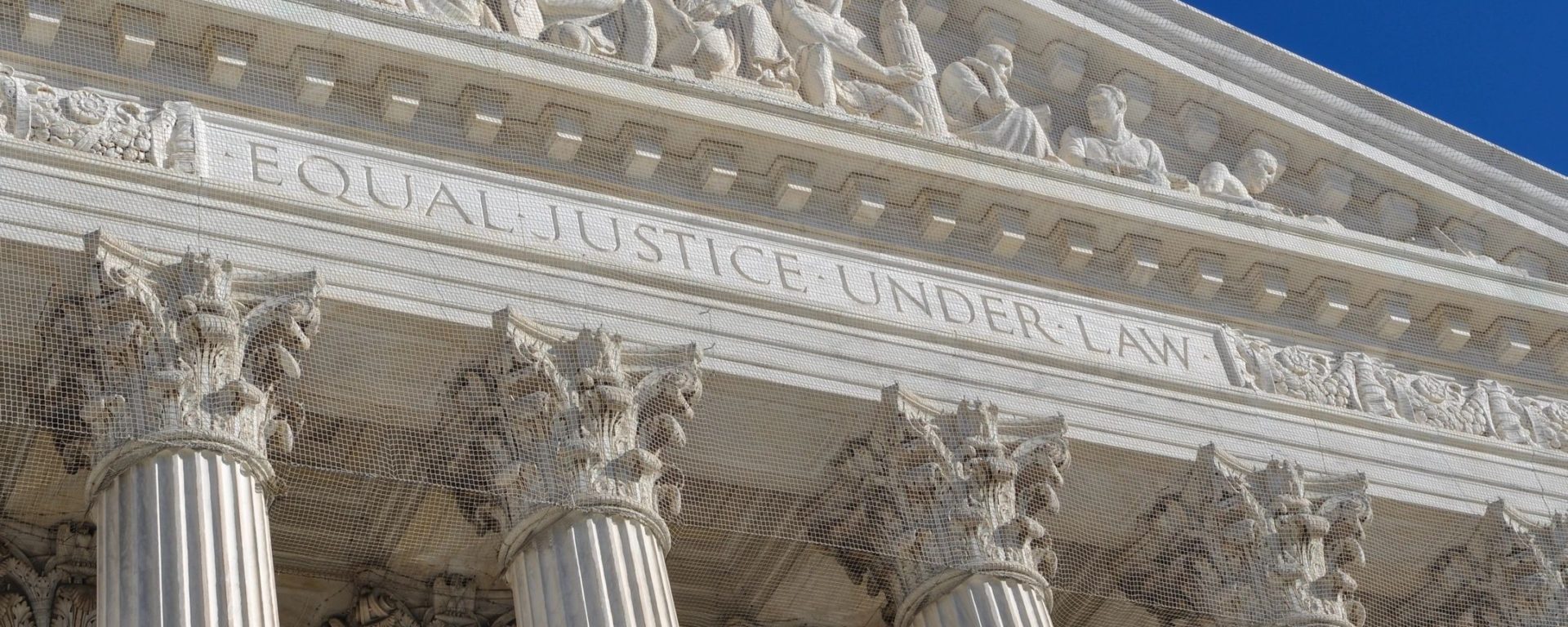

The Supreme Court is poised to consider overturning a 90-year-old precedent that limits the reasons why presidents may remove members of the Federal Trade Commission (FTC) and independent federal agencies.
A ruling in favor of the federal government would bolster the president’s ability to remove senior officials from some federal agencies.
On Dec. 8, the nation’s highest court will hear the case of former FTC member Rebecca Slaughter, whom President Donald Trump fired in March.
Trump’s ousting of Slaughter is part of the president’s ongoing effort to remove some personnel from independent federal agencies whose appointees traditionally have been shielded from termination without cause.
Slaughter, former chief counsel to Sen. Chuck Schumer (D-N.Y.), was first appointed by Trump in 2018 to a seat reserved for Democrats on the FTC and was then reappointed in 2023 by President Joe Biden.
Although the Federal Trade Commission Act provides that FTC members may only be removed for “inefficiency, neglect of duty, or malfeasance in office,” the White House informed Slaughter by letter in March that keeping her in place would be inconsistent with the Trump administration’s priorities.
On Sept. 22, the Supreme Court decided to hear Trump’s appeal of a U.S. Court of Appeals for the District of Columbia Circuit ruling in favor of Slaughter. At the same time, the high court temporarily blocked the appeals court’s order that had allowed Slaughter to remain in her post.
In the D.C. Circuit Court’s ruling, Circuit Judge Neomi Rao dissented, saying the FTC “exercises significant executive power” and that other factors also favor the government in the case.
The precedent under the microscope is Humphrey’s Executor v. United States (1935), which upheld the FTC Act that prevents the president from removing FTC members without cause.
Like Trump, former President Franklin Roosevelt had fired FTC Commissioner William Humphrey without identifying a cause permitted by the FTC Act.
Instead, he dismissed Humphrey after saying the two had different visions for the FTC.
In a unanimous decision, the Supreme Court ruled against Roosevelt. Its primary holding was that commissioners exercise quasi-legislative or quasi-judicial power and therefore can receive greater protection than other agency officials.
“To the extent that it exercises any executive function … [the FTC] does so in the discharge and effectuation of its quasi-legislative or quasi-judicial powers, or as an agency of the legislative or judicial departments of the government,” then-Chief Justice John Sutherland wrote.
In the case at hand, the Supreme Court may examine what distinguishes a commission member’s executive power from “quasi-legislative” or “quasi-judicial” power.
The Trump administration disputes the validity of these classifications.
“Mixed quasi-powers are alien to our constitutional structure,” U.S. Solicitor General D. John Sauer said, later describing independent agencies as a “myth.”
When it comes to the modern FTC, Sauer argues its powers are clearly executive in nature, which means the president has greater authority to remove commissioners. He pointed to things like the FTC’s ability to negotiate international agreements with the secretary of state’s approval.
Slaughter countered that both history and Supreme Court precedent supported the idea of quasi-legislative or quasi-judicial functions occurring within the executive branch.
In a Sept. 16 brief, Sauer said the Humphrey’s Executor precedent no longer prevents FTC removals without cause.
The high court ruled in the 2020 case Seila Law v. Consumer Financial Protection Bureau that Humphrey’s Executor was concerned with the more modest powers that the FTC had in 1935, not the more expansive powers it exercises today, he said.
“Humphrey’s Executor is not a get-out-of-removal-free card for the FTC no matter how much executive power the agency actually exercises,” Sauer said.
The Supreme Court is expected to issue a ruling in Trump v. Slaughter by the end of June 2026.
Sam Dorman contributed to this report.
This article by Matthew Vadum appeared Dec. 8, 2025, in The Epoch Times.