

The U.S. Supreme Court on Jan. 20 ruled unanimously that a restitution order issued under a victim rights law counts as a criminal punishment.
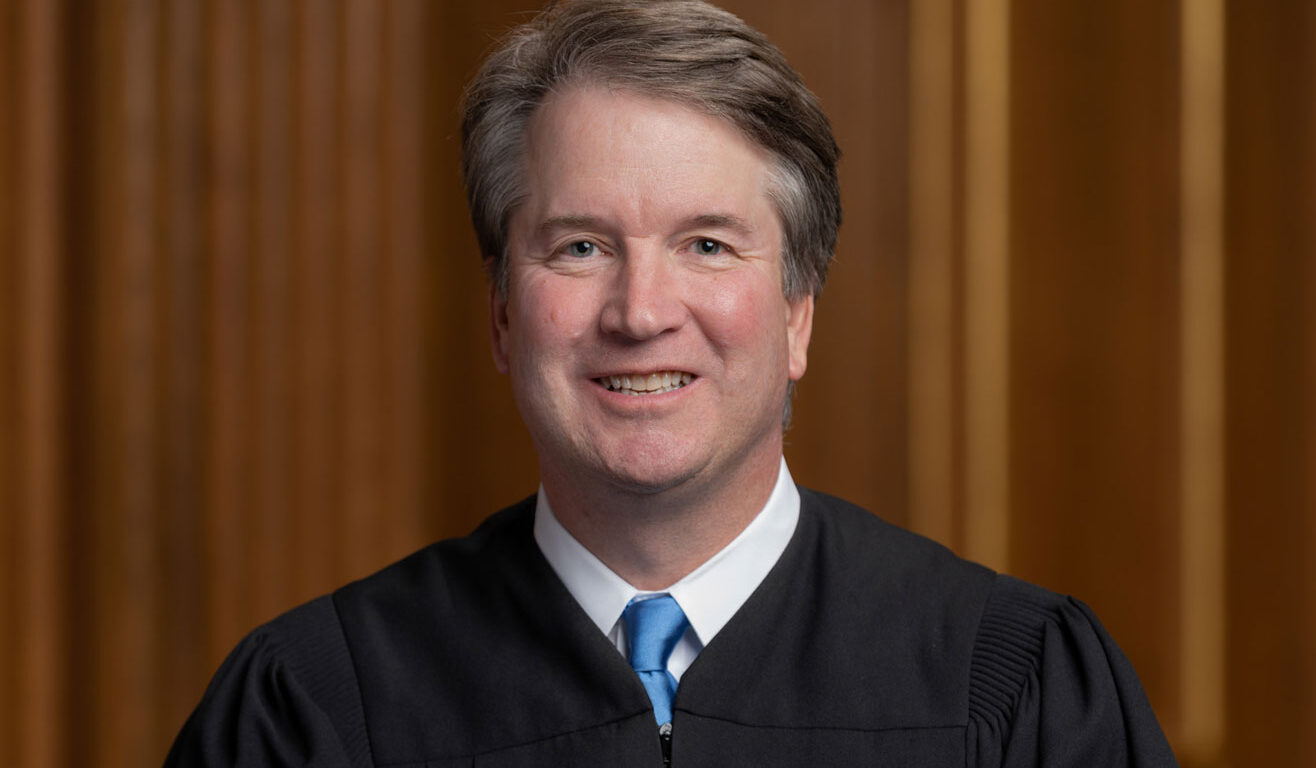
The new opinion, written by Justice Brett Kavanaugh, allows a former prisoner, Holsey Ellingburg Jr., to move forward with his stalled lawsuit over the financial penalty imposed under a law that was enacted after he committed his crime.
Ellingburg carried out a bank robbery in Georgia in December 1995, when the federal Victim and Witness Protection Act (VWPA) was in effect, according to the petition filed in October 2024.
A federal jury convicted Ellingburg in November 1996, and he was sentenced to 322 months—or almost 27 years—in prison, and ordered to pay $7,567.25 in restitution. While incarcerated, he made 36 payments for a total of $2,054.04 until the VWPA-stipulated 20-year restitution period that began at the time of his conviction ran out in 2016, the petition said.
Ellingburg stated in the petition that, because 20 years had passed since his sentencing, he was no longer responsible for restitution payments under the VWPA.
Despite the lapse of time, the Bureau of Prisons continued taking funds from Ellingburg’s prison account. The bureau’s position was that the federal Mandatory Victim Restitution Act (MVRA), which was enacted in 1996, applied to his case. That statute says a defendant is liable for restitution and interest payments for 20 years following a conviction or 20 years after release from prison, whichever is later, the petition said.
In June 2022, Ellingburg was released from prison and moved to Missouri. The government continued trying to collect restitution payments and charging interest. When the petition was filed, the government claimed he owed $13,476.01 in restitution, which is “almost double the amount of restitution he was originally ordered to pay and well more than double the amount outstanding when the twenty-year liability period expired in 2016.”
In March 2023, Ellingburg asked the federal district court in Missouri for an order to halt the restitution payments, arguing that his liability for restitution under the VWPA lapsed in November 2016. He said that applying the extended liability period under the MVRA would violate the ex post facto clause of the U.S. Constitution, the petition said.
The ex post facto clause forbids laws that retroactively criminalize actions, augment punishments for past crimes after the fact, or change rules of evidence to make convictions easier.
The court rejected the motion, siding with several federal courts of appeals that have ruled that retroactively imposing extended liability under the MVRA did not constitute an increase in a defendant’s punishment.
The U.S. Court of Appeals for the Eighth Circuit upheld the district court’s ruling in August 2024, saying its own circuit’s precedent required it to find that criminal restitution was a civil—as opposed to a criminal—remedy and that the ex post facto clause therefore did not apply, the petition said.
Kavanaugh wrote the court’s new five-page opinion.
“Our ruling today does not mean that a restitution statute can never be civil,” the justice said. “But the statutory text and structure of the MVRA demonstrate that restitution under that Act is criminal punishment.”
“Not everything that occurs at criminal sentencing or even that appears in a criminal judgment may necessarily be part of the punishment,” he said, adding that it was not necessary to explore that point further because the court has decided that restitution under the MVRA constitutes criminal punishment.
The Supreme Court reversed the decision of the Eighth Circuit and sent the case back to that court for “further proceedings consistent with this opinion.”
This article by Matthew Vadum appeared Jan. 20, 2026, in The Epoch Times.
Photo: Supreme Court Justice Brett Kavanaugh