
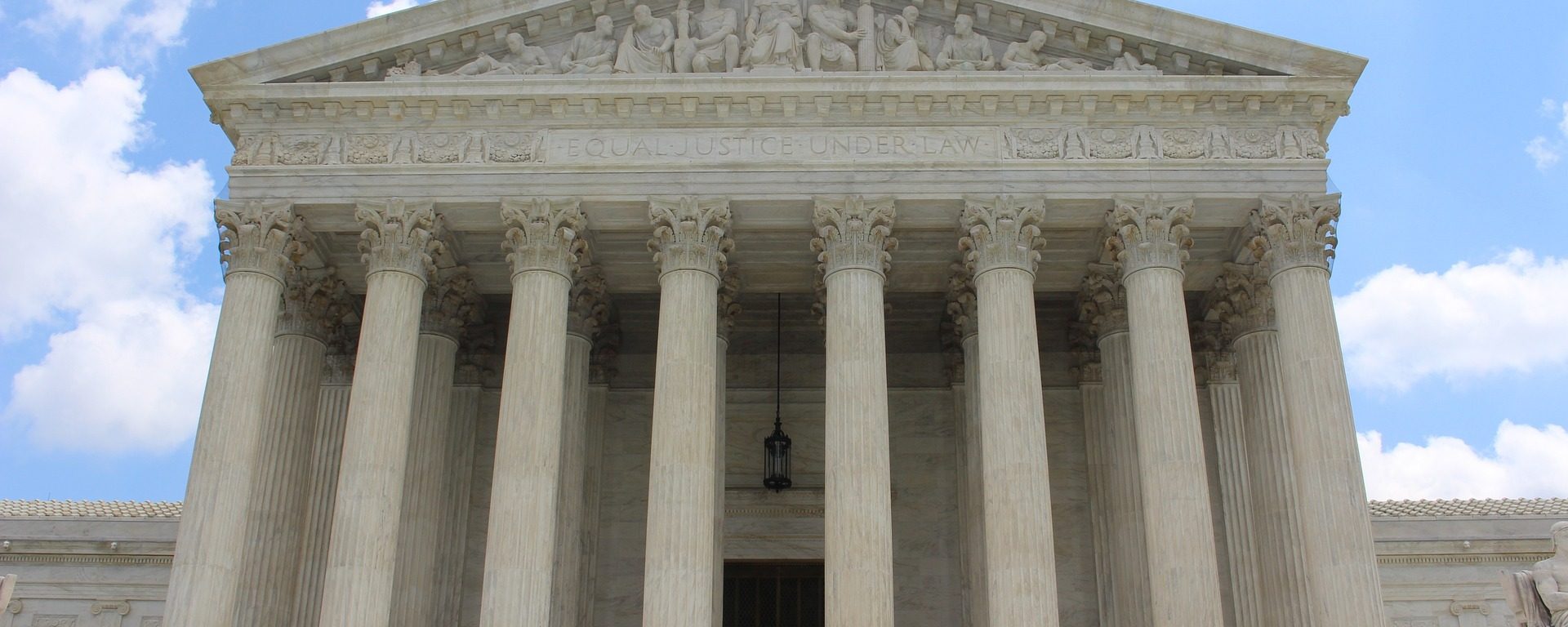

The U.S. Supreme Court on Jan. 2 scheduled oral arguments in cases questioning whether illegal drug users may possess guns, and whether Cuban state-owned companies may be sued for assets nationalized decades ago by Cuba’s communist government.
The nation’s highest court said in an announcement that the gun case, United States v. Hemani, will be heard on March 2, and the nationalization case, Exxon Mobil Corp. v. Corporacion Cimex, will be heard on Feb. 23.
In Hemani, the federal government is defending a U.S. law that forbids those who unlawfully use controlled substances from possessing firearms. Hunter Biden was convicted in June 2024 under the same law used to prosecute Hemani, but his father, then-President Joe Biden, pardoned him in December 2024.
The Trump administration is generally supportive of Second Amendment rights but argues that a federal ban on drug users having firearms is a reasonable restriction that promotes public safety.
In 2022, the Supreme Court voted 6–3 in New York State Rifle and Pistol Association v. Bruen, holding that there is a constitutional right to carry a gun in public for self-defense, and that firearms restrictions must have a historical analogue to be deemed constitutional.
However, in 2024 the court upheld another federal law that bars people under domestic violence-related restraining orders from possessing firearms. The court upheld that law in an 8–1 vote.
The justices found in that case, United States v. Rahimi, that the Second Amendment is not violated when an individual is disarmed after a court has found him to pose a credible threat to the physical safety of another.
In Hemani, the respondent, Ali Danial Hemani, is a dual citizen of the United States and Pakistan, according to the government’s petition.
The petition describes Hemani as “a drug dealer who uses illegal drugs.” The FBI obtained a search warrant to search his home and found a Glock 9mm pistol, 60 grams of marijuana, and 4.7 grams of cocaine.
The U.S. Court of Appeals for the Fifth Circuit held in the case that the Second Amendment prevents Congress from restricting the possession of firearms by habitual users of illegal drugs.
The Fifth Circuit threw out a felony conviction against Hemani, but held that the ban could still apply to people accused of being intoxicated by drugs and armed at the same time.
The government’s petition states that habitual drug users in possession of firearms “present unique dangers to society—especially because they pose a grave risk of armed, hostile encounters with police officers while impaired.”
At least 32 states and territories have passed similar laws limiting the possession of firearms by drug addicts and drug users, the petition reads.
Attorneys for Hemani say the ban puts millions of Americans at risk because—according to government data—one-fifth of Americans have tried marijuana.
Exxon Mobil v. Corporacion Cimex
In the Exxon Mobil case, the company, which was previously called Standard Oil Co., sued to seek compensation from Cuban government-owned companies for oil and natural gas assets seized in 1960.
Its lawsuit was initiated under the federal Helms-Burton Act, a 1996 law that allows Americans to sue “any person … that traffics” in confiscated property, including by possessing, transferring, using, or profiting from it, according to Exxon Mobil’s petition.
Cuba’s late dictator Fidel Castro overthrew the government in 1959 and turned Cuba into a one-party state in which socialist policies were implemented, including the nationalization of the assets of foreign businesses.
The law defines “person” to include “any agency or instrumentality of a foreign state,” and specifically contemplates civil judgments being obtained against “an agency or instrumentality of the Cuban Government,” according to the petition.
The legal issue here is whether the law “abrogates foreign sovereign immunity in cases against Cuban instrumentalities,” the petition said.
Foreign sovereign immunity is a legal doctrine that prevents governments from being sued unless they agree they may be sued. Abrogation is the act of formally annulling a law or legal provision.
Until recently, parties like Exxon were unable to pursue claims against Cuban government-owned enterprises under the law because President Bill Clinton suspended Title III, the part of the law allowing compensation lawsuits to be filed.
In his first term, President Donald Trump revoked the suspension on May 2, 2019, and Exxon filed its lawsuit on the same day.
In 2024, a divided U.S. Court of Appeals for the District of Columbia Circuit determined that Title III claims may only move forward against Cuban entities if the lawsuit falls under an exception in the federal Foreign Sovereign Immunities Act. The circuit court sent the case back to the federal district court to determine whether the exception applies in this case.
Pigeonholing Helms-Burton into the framework of the Foreign Sovereign Immunities Act denies many claimants the opportunity to exercise the judicial remedy promised by Helms-Burton “because many instances of trafficking by Cuban-owned enterprises may not satisfy any [Foreign Sovereign Immunities Act] exception,” according to the petition.
The Cuban government-owned company, Corporacion Cimex, argued in a brief that if Exxon’s legal argument prevails, it could have ramifications that reach beyond Cuban companies.
Companies owned by other governments would be exposed to Title III actions in U.S. courts despite “the immunity provisions of the Foreign Sovereign Immunities Act, which allows suit only on the conditions specified in its enumerated exceptions to the immunity it otherwise categorically confers,” the brief said.
This article by Matthew Vadum appeared Jan. 2, 2026, in The Epoch Times.