

The U.S. Supreme Court seemed receptive on Jan. 20 to a challenge to a Hawaii law forbidding the carrying of handguns by concealed carry permit holders on private property open to the public unless the property owner explicitly consents.
Hawaii argues the law protects private property rights and the public, while those challenging the law say it violates their constitutionally protected right to carry guns in public to defend themselves.
The justices heard an oral argument over the law in the case known as Wolford v. Lopez.
The case was brought by three Hawaii permit holders and the Hawaii Firearms Coalition, a gun rights organization, alleging that the state violated the right to bear arms.
Justices spent time discussing the Supreme Court’s landmark ruling in New York State Rifle and Pistol Association v. Bruen (2022), which found New York’s restrictive handgun licensing law violated the Second Amendment.
In it, the court affirmed the right to carry firearms in public for self-defense, and created a legal test requiring that gun laws be consistent with the nation’s “historical tradition of firearm regulation” to survive constitutional scrutiny.
Hawaii’s Act 52 bans handguns on private property unless the permit holder has received “express authorization to carry a firearm on the property by the owner, lessee, operator, or manager of the property.”
It also bans firearms in bars, beaches, parks, and “sensitive places” such as hospitals, schools, and government buildings.
The law places a burden on private property owners who wish to allow concealed carry on their property to communicate their policy to the public.
The state calls the rule requiring express authorization to carry the “default rule,” but critics call it the “vampire rule,” naming it after the mythical creatures that need permission to enter a property, Second Amendment expert Cam Edwards previously told The Epoch Times.
Earlier in the litigation, a federal district judge blocked the law, but the U.S. Court of Appeals for the Ninth Circuit largely reversed that decision. In a 2–1 vote, the court allowed Hawaii to enforce much of the law because, in its view, Act 52 was consistent with Bruen, which recognized a “sensitive places” exception to the right to bear arms in public.
Historical Tradition Test
During the oral argument, justices questioned attorneys over whether the Hawaii law meets the historical tradition test.
Hawaii’s attorney, Neal Katyal, defended the state’s argument that Louisiana’s Black Codes of the 1860s provide a helpful historical analogue supporting the constitutionality of Act 52.
Those laws forbade firearms on plantations without the owner’s permission. Historians say the laws were created to control freed slaves and deny them their constitutional rights.
Katyal said when the Hawaii State Legislature passed Act 52, it “took Bruen seriously,” adding that the statute is “all about making sure the right of Bruen is vindicated.”
Justice Samuel Alito told Katyal it was “the height of irony to cite a law that was enacted for exactly the purpose of preventing someone from exercising the Second Amendment right, to cite this as an example of what the Second Amendment protects.”
“You’re just relegating the Second Amendment to second-class status,” Alito added.
Justice Neil Gorsuch asked the challengers’ attorney, Alan Beck, whether the Black Codes “should inform this court’s decision-making when trying to discern what is this nation’s traditions?”
Beck replied in the negative, and then Gorsuch said the other side disagrees and is arguing that an 1865 law “is a ‘dead ringer’ for this statute.”
Beck said that statute was “passed to discriminate against African Americans that were newly freed slaves,” and should not be used as a historical analogue to modern laws.
Justice Ketanji Brown Jackson suggested the Black Codes may be used in the historical tradition analysis because they were “part of the history and tradition of our country” and “were not deemed unconstitutional at the time they were enacted.”
Representing the Trump administration, Principal Deputy Solicitor General Sarah Harris told Jackson the Black Codes cannot be used in the analysis because they are “outliers” and are “by definition unconstitutional.”
Jackson countered that they were only determined to be unconstitutional years after they were enacted. “So why aren’t they in?” she added.
Harris said she could think “of no greater outlier than blatantly unconstitutional laws” such as the Black Codes that were created “to reduce newly freed slaves back to conditions of servitude, [and] made it a new crime … to go about armed on private property.”
Hawaiian Customs
Chief Justice John Roberts said that Hawaii has a tradition in which people don’t own property but hold it on a long-term lease.
He asked if this meant that Bruen should be interpreted differently in Hawaii.
Katyal said “No,” the Second Amendment means the same thing in Hawaii as it means in other states.
Justice Ketanji Brown Jackson told Beck, “something may be wrong” with the historical tradition test in Bruen.
The problem is the test is “tying us” to historical circumstances whether we agree with them or not, she said.
Justice Sonia Sotomayor suggested Hawaii’s “culture” of not carrying “guns wherever they go,” may trump the broader national tradition of carrying firearms in public.
Beck said Bruen made clear that it is “our national tradition … not local customs that controls in this area of law.”
Jackson said some argue “this is really a property case, not a Second Amendment case.”
Many states imply that a property owner who opens his property to the public is consenting to the carrying of firearms, but here “Hawaii has said no,” she said.
Beck disagreed, saying the law at issue “implicates arms-bearing conduct.”
The Supreme Court is expected to rule on the case by the end of June.
This article by Matthew Vadum appeared Jan. 20, 2026, in The Epoch Times.
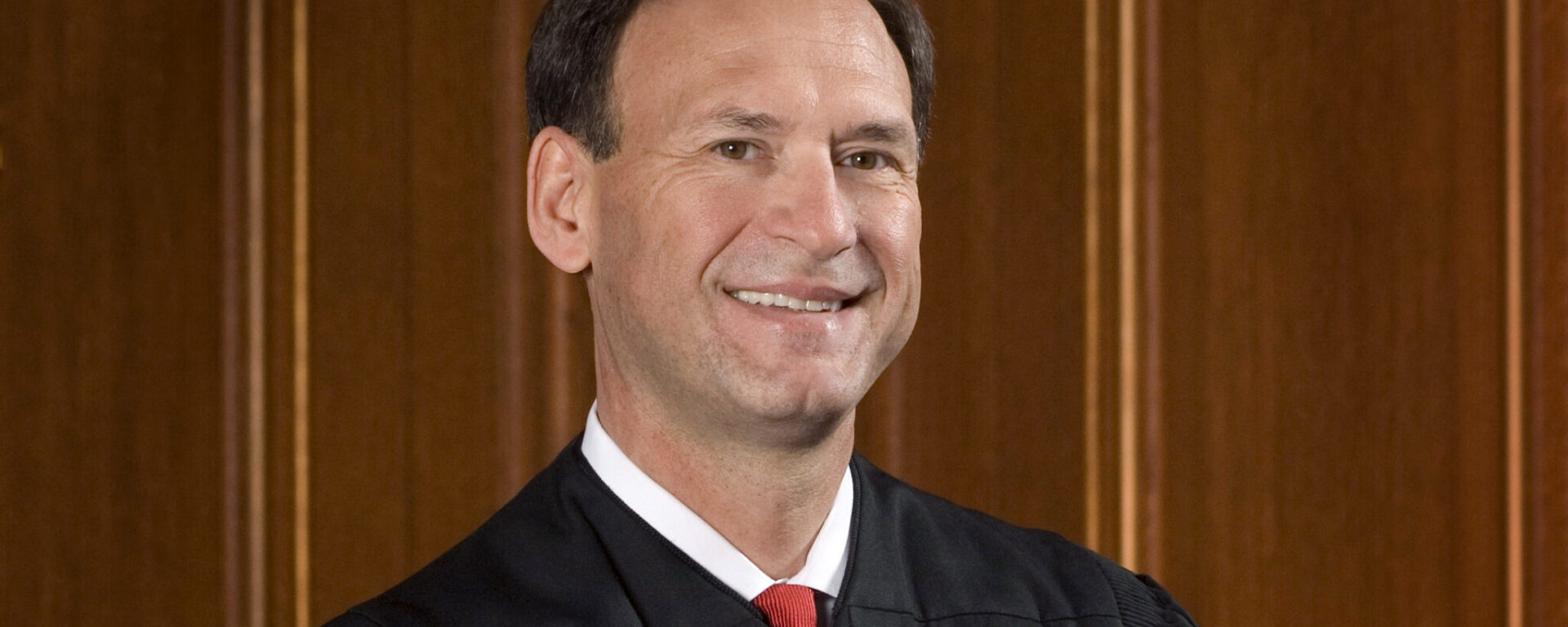
Photo: Supreme Court Justice Samuel Alito