
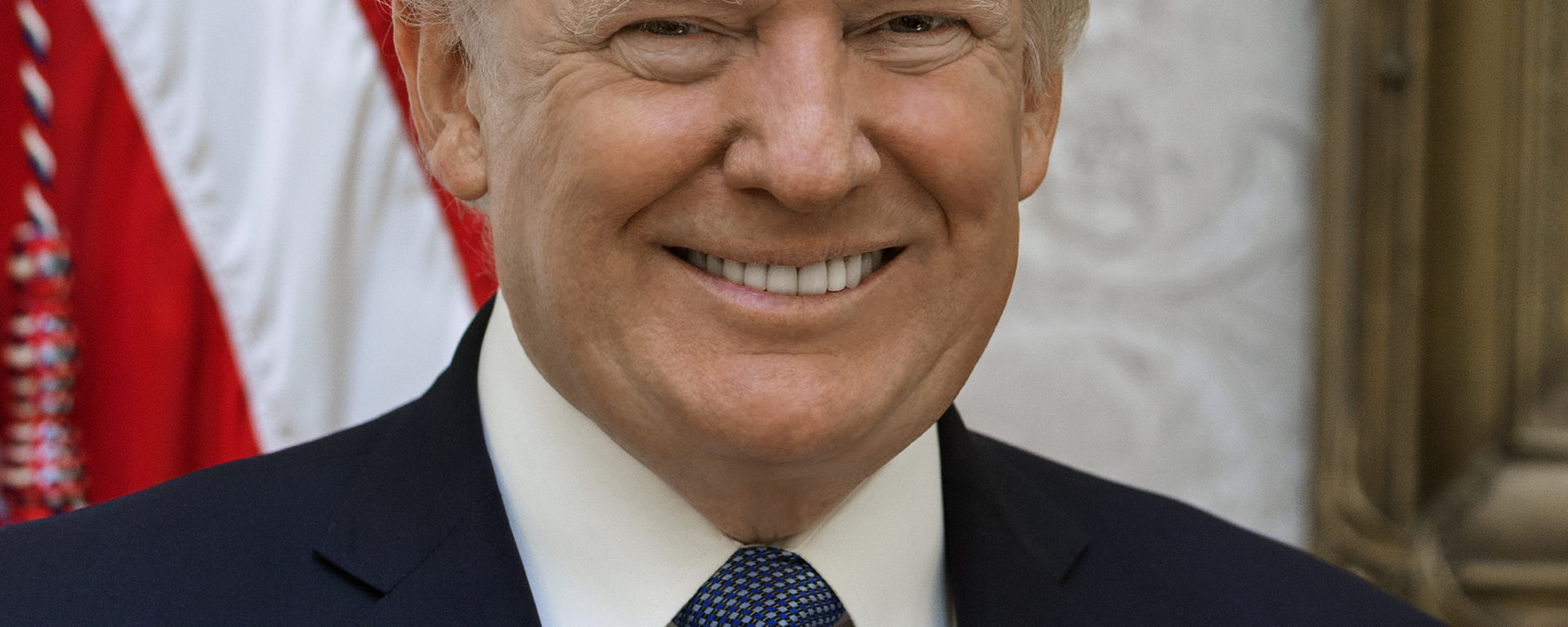

A federal appeals court on Feb. 6 turned away a challenge to President Donald Trump’s executive orders ending so-called diversity, equity, and inclusion (DEI) programs in the federal government.
A three-judge panel of the U.S. Court of Appeals for the Fourth Circuit overturned a preliminary injunction issued in February 2025 by U.S. District Judge Adam Abelson in Maryland that partly blocked the executive orders.
Abelson found the executive orders likely violated the U.S. Constitution, including the free speech protections of the First Amendment, and the Fifth Amendment’s due process requirements, and issued a nationwide injunction forbidding the Trump administration from ending or modifying DEI-related federal contracts and grants.
The judge wrote that because the executive orders under challenge were vague, federal contractors and recipients of grants have “no reasonable way to know what, if anything, they can do to bring their grants into compliance.”
The lawsuit was brought by the plaintiffs, National Association of Diversity Officers in Higher Education, American Association of University Professors, and the mayor and city council of Baltimore, Maryland.
The federal government appealed Abelson’s decision, and in March 2025, the Fourth Circuit temporarily blocked the district court’s injunction.
In the new ruling, Circuit Judge Albert Diaz wrote that the president “may determine his policy priorities and instruct his agents to make funding decisions based on them.”
Trump has decided that “equity isn’t a priority in his administration and so has directed his subordinates to terminate funding that supports equity-related projects to the maximum extent allowed by law.”
“Whether that’s sound policy or not isn’t our call,” he said. “We ask only whether the policy is unconstitutionally vague for funding recipients.”
Diaz said the plaintiffs may not challenge Trump’s executive orders head-on, but instead could challenge how agencies apply the orders to particular grant recipients.
At the same time, Diaz criticized the Trump administration’s stance on DEI.
In a separate concurring opinion, the judge said he reached his conclusions in the case “reluctantly.”
The evidence suggested “a more sinister story: important programs terminated by keyword; valuable grants gutted in the dark; worthy efforts to uplift and empower denigrated in social media posts.”
Diaz said those disappointed by this ruling should “continue your critical work. Keep the faith.”
The administration’s “obsession over so called ‘woke’ DEI programs appears to know no bounds,” the judge added.
As an example, he said that Secretary of State Marco Rubio “somehow found time to rail against the Calibri typeface previously approved for State Department use by his predecessor. I kid you not.”
Diaz was referring to Rubio’s decision to reverse a Biden administration decision and return to the Times New Roman typeface in diplomatic correspondence.
Rubio said in a cable sent to U.S. embassies and consulates at the time that “typography shapes how official documents are perceived in terms of cohesion, professionalism, and formality.”
The Biden administration’s decision to embrace Calibri came from what Rubio characterized as the misguided DEI policies of previous Secretary of State Antony Blinken.
The typeface change “was promised to mitigate accessibility issues for individuals,” Rubio said, adding it failed to achieve that goal and had cost the Department of State $145,000.
Diaz said Blinken’s change was made “to help improve accessibility for those with dyslexia or other visual impairments,” yet Rubio said the change was an example of an “illegal, immoral, radical, [and] wasteful [diversity initiative].”
The Fourth Circuit panel sent the case back to the district court for further proceedings.
Trump’s Executive Order 14151 directed the Office of Management and Budget and the Department of Justice to end “all discriminatory programs,” including “illegal DEI and ‘diversity, equity, inclusion, and accessibility’ (DEIA) mandates, policies, programs, preferences, and activities in the Federal Government, under whatever name they appear.”
President Joe Biden used the DEIA acronym in Executive Order 14035, which required each federal agency to appoint a chief diversity officer or a diversity and inclusion officer. Accessibility in this context means “federal workspaces must be fully accessible to employees with disabilities.”
Trump had rescinded Executive Order 14035 when he signed Executive Order 14148.
Trump’s Executive Order 14173 targeted what it described as “dangerous, demeaning, and immoral race- and sex-based preferences under the guise of so-called ‘diversity, equity, and inclusion’ (DEI) or ‘diversity, equity, inclusion, and accessibility’ (DEIA) that can violate the civil-rights laws of this Nation.”
White House spokesperson Abigail Jackson said the new ruling was a “big win.”
The Trump administration “has proudly put an end to unlawful DEI discrimination in the federal government,” she added.
Skye Perryman of Democracy Forward, which represents the plaintiffs, said her organization is “looking forward to continuing to litigate this case in the district court.”
The Associated Press and Reuters contributed to this report.
This article by Matthew Vadum appeared Feb. 6, 2026, in The Epoch Times.