

The U.S. Supreme Court ruled 5–4 on Feb. 24 that Americans may not sue the U.S. Postal Service (USPS) when its employees intentionally fail to deliver mail.
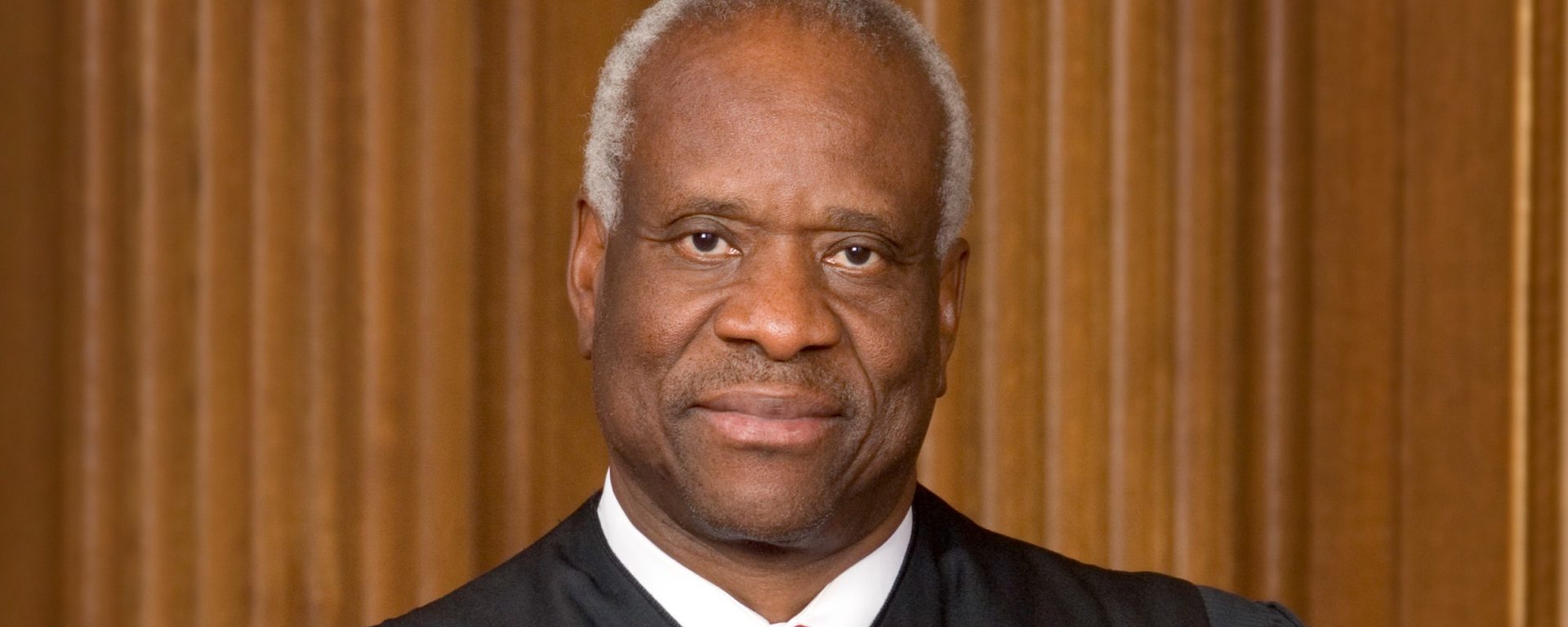
Justice Clarence Thomas wrote the majority opinion in USPS v. Konan, ruling against Lebene Konan, who claims racial prejudice motivated postal employees’ actions.
Konan, who described herself in a brief as a “respected black realtor, insurance agent, and landlady” in Euless, Texas, said that in 2020, postal employees “began a years-long campaign of racial harassment” against her. She claimed that the USPS failed to deliver mail to her or her tenants because its employees allegedly “did not ‘like the idea’ that a black person owned the properties and leased rooms to white people.”
Withholding mail violates federal law, and in this case, it drove away current and prospective tenants, “causing the value of Ms. Konan’s properties to decline and costing her rental income,” the brief said.
Konan sued in federal district court, bringing civil claims including a discrimination claim against USPS.
Specifically, Konan sued under two equal protection statutes and the Federal Tort Claims Act (FTCA). The FTCA grants waivers to sovereign immunity in certain situations, allowing lawsuits against the federal government “under circumstances where the United States, if a private person, would be liable.”
Sovereign immunity is a legal doctrine that prevents governments from being sued in their own courts unless they consent to being sued.
A district court ruled against Konan in January 2023, finding her claims were “barred by sovereign immunity,” according to USPS’s petition.
The district court said the FTCA does not waive the government’s sovereign immunity in “any claim arising out of the loss, miscarriage, or negligent transmission of letters or postal matter,” the petition said.
Konan argued that the waiver language did not preclude her lawsuit because, as she alleged, the “USPS intentionally and deliberately refused to deliver her mail.” The postal matter exception covers only negligent acts, as opposed to intentional torts, according to the petition.
The district court found that Konan’s claims under the Federal Tort Claims Act pertain to “personal [and] financial harms arising from nondelivery [of postal matter],” which means those claims are “barred by sovereign immunity.” The equal protection claim was also dismissed.
The U.S. Court of Appeals for the Fifth Circuit reversed the ruling in part in March 2024, upholding the dismissal of the equal protection claim but allowing the claim under the Federal Tort Claims Act to proceed.
The district court had dismissed the Federal Tort Claims Act claims after it found that Konan’s allegations came about as a result of “loss” or “miscarriage,” the Fifth Circuit said, according to the petition.
“We disagree,” the circuit court said. “This case does not fall into one of those limited situations” because “the postal workers’ actions were intentional and thus cannot constitute a ‘negligent transmission.’”
During oral argument on Oct. 8, 2025, before the Supreme Court, Justice Samuel Alito suggested that ruling in favor of Konan could open the floodgates to litigation against the USPS.
“It is going to be very easy for people who are unhappy with the delivery of mail to claim that they’re not getting their letters because of intentional conduct,” Alito said.
“What will the consequences be if all these suits are filed and they have to be litigated?” the justice added. “Is the cost of a first-class letter going to be $3 now?”
In the newly filed majority opinion, Thomas wrote that Congress waived the government’s sovereign immunity for certain tort suits based on its employees’ conduct, but preserved that immunity in some claims about mail.
Thomas noted that the Federal Tort Claims Act waives immunity “arising out of the loss, miscarriage, or negligent transmission of letters or postal matter.”
“This case concerns whether this exception applies when postal workers intentionally fail to deliver the mail,” the justice wrote. “We hold that it does.”
This court has interpreted the postal exception to include when a plaintiff is harmed “because mail either fails to arrive at all or arrives late, in damaged condition, or at the wrong address,” Thomas added.
The Supreme Court vacated the judgment of the Fifth Circuit and sent the case back to that court “for further proceedings consistent with this opinion.”
Thomas’s opinion was joined by Justices Alito, Brett Kavanaugh, Amy Coney Barrett, and Chief Justice John Roberts.
Justice Sonia Sotomayor filed a dissenting opinion, which was joined by Justices Neil Gorsuch, Elena Kagan, and Ketanji Brown Jackson.
Sotomayor wrote that she agreed with the Fifth Circuit’s ruling, which stated that under the Federal Tort Claims Act, a plaintiff could make a claim concerning intentional misconduct by postal employees, which would include holding back a person’s mail for “malicious reasons.”
The Supreme Court majority’s interpretation “transforms, rather than honors, the exception Congress created,” she wrote.
Sotomayor wrote that even if ruling for Konan would lead to more mail-related lawsuits against the government, that would not give this court authority to change the text that Congress approved.
“It is not the role of the Judiciary to supplant the choice Congress made because it would have chosen differently,” she wrote.
This article by Matthew Vadum appeared Feb. 24, 2026, in The Epoch Times.
Photo: Supreme Court Justice Clarence Thomas