
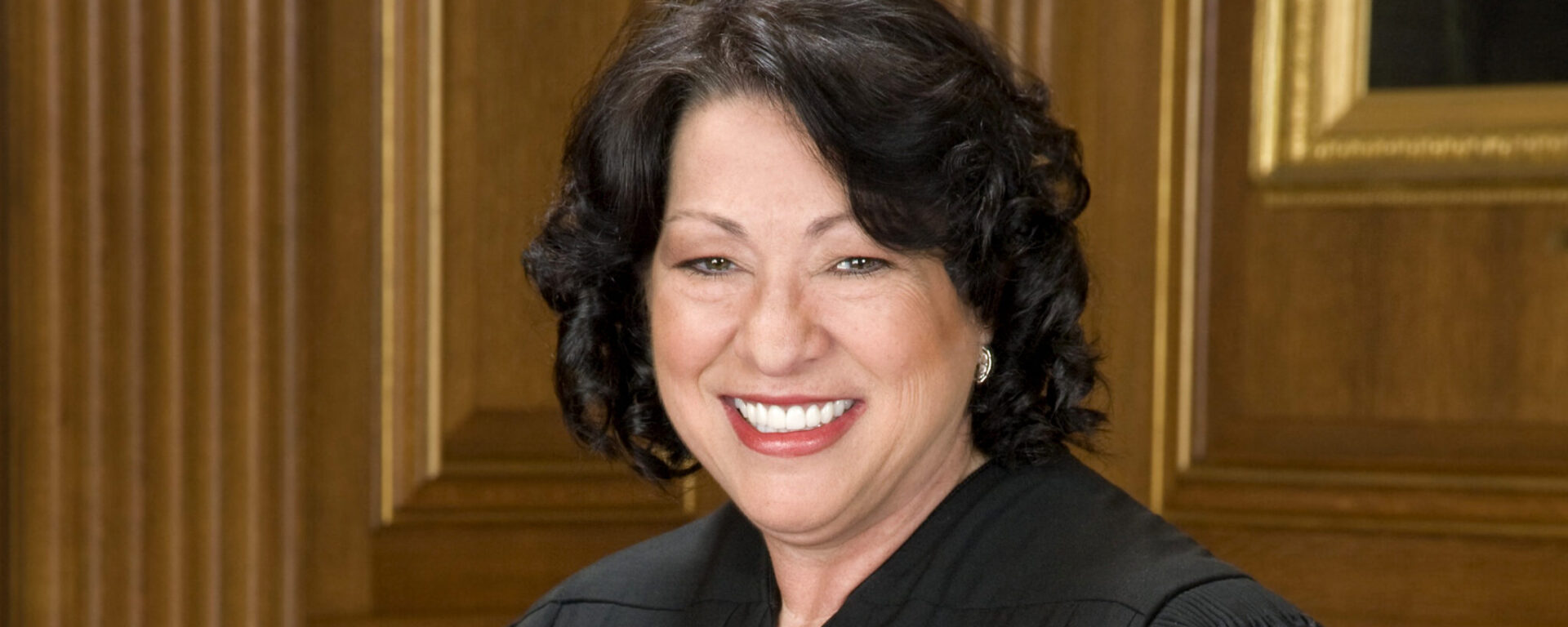

The U.S. Supreme ruled unanimously on Feb. 24 that parents who claimed baby food gave their son autism should be able to pursue their lawsuit in state court.
Justice Sonia Sotomayor wrote the 9–0 opinion in Hain Celestial Group Inc. v. Palmquist.
Sotomayor said the U.S. Court of Appeals for the Fifth Circuit ruled correctly when it removed, or transferred, the case from a federal district court to a Texas state court at the request of the parents.
The parents “exercised their right to choose a state forum,” she said.
“The decision to structure their case in this way” was the parents’ to make, and federal court rules do not allow a court or a defendant “to override their choice in these circumstances,” Sotomayor said.
One of the petitioners, Hain Celestial Group of Hoboken, New Jersey, makes and sells organic baby food. Its products are sold by the other petitioner, Whole Foods Market, a grocery chain headquartered in Austin, Texas.
The respondents, Sarah and Grant Palmquist, are Texas residents. Their son, E.P., suffers from “an unusually profound case of Autism Spectrum Disorder” and consumed Earth’s Best foods, made by Hain, through his early years, according to the companies’ petition filed in January 2025.
The parents sued Hain in state court in Texas, claiming the baby food contained heavy metals that caused their child’s autism. They also sued Whole Foods, which they say sold them the baby food, for breach of warranty and negligence, and which they say vouched for the safety of the food.
A breach of warranty occurs when a seller fails to adhere to its promises about a product or service. Such promises often pertain to the safety or quality of the product.
Hain filed to remove, or transfer, the case to the federal district court in the Southern District of Texas, arguing diversity jurisdiction. This refers to the authority of federal courts to hear cases in which the parties are from different states.
The petition said that under Texas law, a seller such as Texas-based Whole Foods “that did not manufacture a product is not liable for harm caused … by that product.”
After the case was removed to federal district court, the parents amended their complaint, “alleging new causes of action against Whole Foods based on novel theories,” according to the companies. The parents also claimed that Whole Foods made “express factual representations” about the safety of Hain’s baby food and that they relied on those representations when making purchasing decisions, according to the petition.
The parents asked the federal court to send the case back to the state court, arguing that Whole Foods should be a party in the proceeding because their amended complaint fell within an exception to the Texas law that sellers should not be held liable for products they didn’t manufacture.
The petition said the federal court sided with the petitioners and denied the motion, finding that under a time-of-filing rule, it was not allowed to consider the amendments made to the complaint after it was removed to federal court. The federal court dismissed the claim against Whole Foods with prejudice, meaning the claim may not be brought again.
With Whole Foods excluded from the case, the parents and Hain spent more than a year on the discovery process, during which evidence was gathered. The case went to trial, and the federal court ruled in favor of Hain, finding that the parents had not produced enough evidence to show that ingesting heavy metals could have caused E.P.’s symptoms, the petition said.
The parents appealed, arguing that the federal district court erred in excluding Whole Foods as a party and that the case should have been sent back to state court.
A panel of the Fifth Circuit ruled that the federal district court should not have dismissed Whole Foods as a party and ordered that the case return to state court for a brand new trial, the petition said.
Hain asked the Supreme Court in the January 2025 petition to review the Fifth Circuit’s ruling, saying it conflicted with decisions of other courts of appeals.
The ruling also “egregiously wastes judicial and party resources with no apparent benefit,” the company said.
The Palmquists said in a reply brief that the company “significantly overstated” disagreements among the appeals courts on the issues involved in the case.
In its new ruling, the Supreme Court affirmed the decision of the Fifth Circuit.
This article by Matthew Vadum appeared Feb. 24, 2026, in The Epoch Times.
Photo: Official Portrait of Justice Sonia Sotomayor