

The U.S. Supreme Court ruled unanimously on March 20 that a street preacher may sue to block enforcement of a local ordinance against street preaching even though he was previously convicted of violating it.
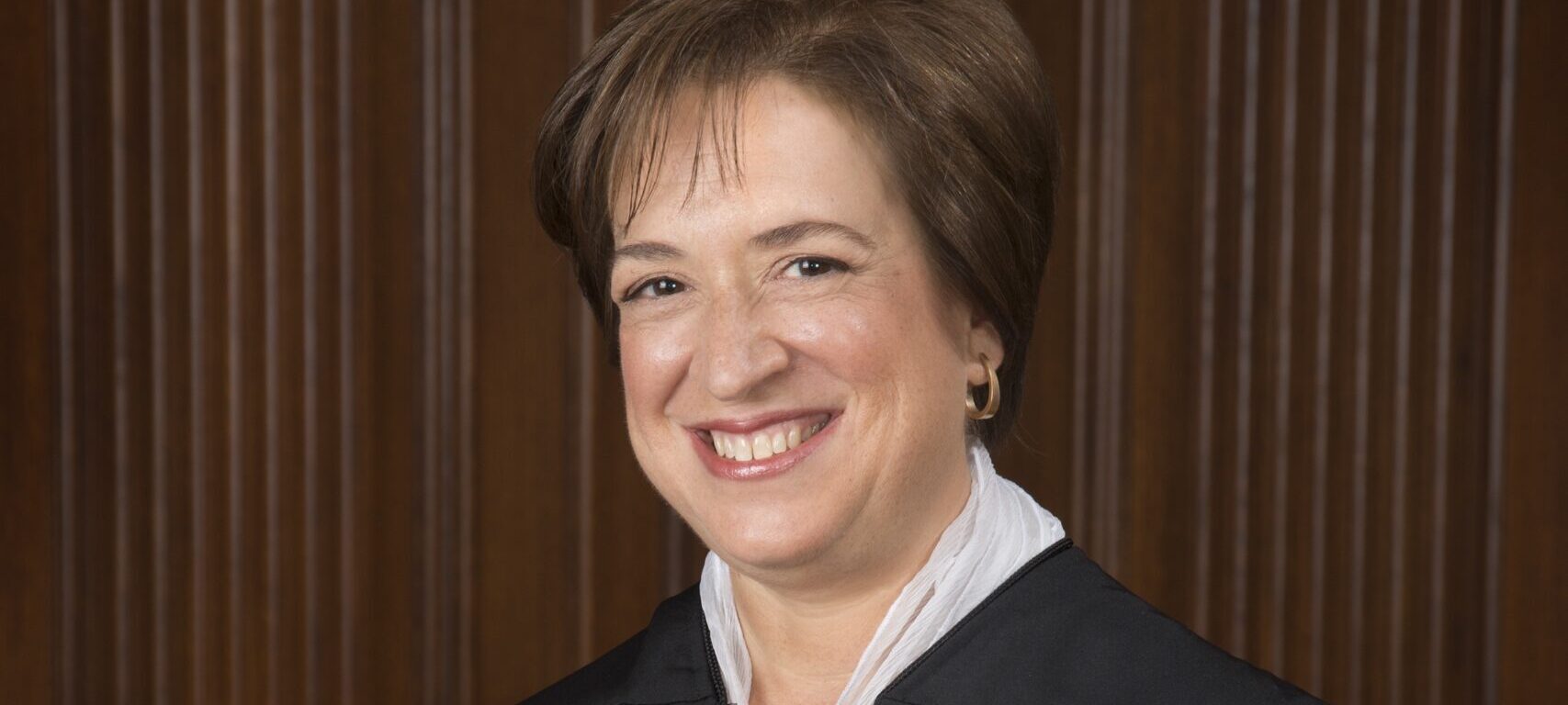
Justice Elena Kagan wrote the 9–0 decision in Olivier v. City of Brandon.
In its new ruling, the court examined its 1994 decision in Heck v. Humphrey, in which it held that, to recover damages for an allegedly unconstitutional conviction in a Section 1983 lawsuit, the plaintiff must prove that the conviction has been overturned.
Petitioner Gabriel Olivier brought a lawsuit against Brandon, Mississippi, under 42 U.S.C. Section 1983, a federal law that allows individuals to sue governments for civil rights violations. He sought a court declaration that the ordinance violated the First and 14th Amendments to the U.S. Constitution and an injunction blocking its enforcement against him.
The ordinance in Brandon requires that protests and demonstrations near the city’s amphitheater take place only in a designated area three hours before and an hour after a live event. The local law also forbids the use of loudspeakers that are “clearly audible more than 100 feet” away from the designated area. The restrictions apply “regardless of the content and/or expression” of the demonstration or protest, according to the city’s brief.
The fact that Olivier was convicted of violating the local ordinance does not bar his lawsuit, Kagan wrote.
Because he wants to sue only for “forward-looking relief—nothing to do with Olivier’s prior conviction,” Heck v. Humphrey does not apply, she wrote.
“Heck prohibits the use of [Section] 1983 to challenge the validity of a prior conviction or sentence so as to obtain release from custody or monetary damages. That decision has no bearing on Olivier’s suit seeking a purely prospective remedy.”
Olivier feels “called to share the gospel with his fellow citizens,” according to the petition he filed with the Supreme Court.
When Olivier “shares his faith, he hands out religious literature ‘expounding on the gospel message’ and ‘attempts to engage individuals in conversation or debate on various religious topics,’” the petition states.
On several occasions in 2018 and 2019, Olivier engaged in these actions at the amphitheater.
After the city opened its amphitheater in 2018, Olivier visited the facility with a group to “evangelize,” according to the city’s brief.
Outside the amphitheater, the group used a loudspeaker to call individuals “Jezebels” and other names. The group held up large signs showing, among other things, pictures of aborted fetuses covered in blood, the brief said.
These activities caused the city hardship as police had to step away from traffic posts “to prevent fights from breaking out between the group and event-paying attendees.” Event attendees walked in the road to avoid Olivier’s group that was on the sidewalk, according to the brief.
City Ordinance
The City of Brandon enacted its ordinance in 2019, and in 2021, Olivier and his group showed up at the amphitheater during a live concert. Olivier spoke with a police officer while another member of the group used a megaphone. An officer ordered him to go to the designated area, but he declined and was charged with violating the ordinance, the brief said.
According to the petition, Olivier entered a no-contest plea in municipal court and received a $304 fine and a suspended 10-day sentence of imprisonment. Olivier paid the fine and did not appeal.
He brought a Section 1983 lawsuit against the city, seeking an injunction blocking the ordinance, but a federal district court ruled against Olivier in September 2022.
He appealed to the U.S. Court of Appeals for the Fifth Circuit, which in August 2023 also ruled against him. The circuit court applied its circuit precedent, construing the Supreme Court’s ruling in Heck v. Humphrey.
The Fifth Circuit held that under Heck, Olivier was unable to challenge the ordinance, even if enforcing it in the future would infringe his constitutional rights.
In other words, the circuit court determined that because he paid a fine for violating the ordinance, this permanently removed his right to sue under Section 1983, the petition said.
In the new opinion, Kagan wrote that the justices “have to agree that if Olivier succeeds in this suit, it would mean his prior conviction was unconstitutional.”
“So, strictly speaking, the Heck language fits. But that could just show that the phrasing was not quite as tailored as it should have been.”
“We think, with the benefit of hindsight … that the sentence relied on swept a bit too broad. That language was used in Heck to identify claims that were really assaults on a prior conviction, even though involving some indirection.”
The Supreme Court reversed the judgment of the Fifth Circuit and returned the case to that court “for further proceedings consistent with this opinion.”
This article by Matthew Vadum appeared March 20, 2026, in The Epoch Times.
Photo: Supreme Court Justice Elena Kagan