

Investigative journalist Matthew Vadum appeared on NewsX World in India on the evening of August 2, 2026 (U.S. East Coast time) to discuss President Trump’s coordinated currency intervention with Japan to support the yen.
Trump described the move as a gesture of friendship and a step toward global economic stability after the yen came under heavy pressure. Japan’s Finance Ministry confirmed the joint yen-buying action on July 31—the first such coordinated U.S.-Japan effort since the post-tsunami intervention in 2011.
Vadum noted that the action reflects the strong personal relationship between Trump and Japanese Prime Minister Sanae Takaichi, whom the president has publicly called a strong leader and close friend. Trump has said the United States is “always there for Japan” and that America also gains a financial benefit from the arrangement. The Japanese economy has faced challenges in recent years; the U.S. help provides reassurance to Tokyo.
On Treasury Secretary Scott Bessent’s calls for higher Bank of Japan interest rates, Vadum said Japan will certainly consider the suggestion, but that higher rates can curb growth by making investment more expensive. Whether the central bank follows through remains uncertain. The fact that Washington is willing to help is itself a significant signal of alliance strength.
Watch:
Vadum also appeared on NewsX World on the evening of August 2, 2026 (U.S. East Coast time) to discuss President Trump’s decision to pause what he described as a major military strike on Iran after regional partners urged restraint and a possible diplomatic opening appeared on the Strait of Hormuz and Iran’s nuclear program.
Trump said Saudi Arabia, the UAE, Qatar, and Iran itself had asked Washington to hold off so diplomacy could proceed. He indicated talks would begin imminently and framed the potential outcome as “denuclearization of Iran,” while stressing U.S. forces remained ready if negotiations failed. Iran has been discussing Strait management with Oman and efforts to revive earlier understandings with Washington.
Vadum argued that the pause does not change the underlying reality: Iran’s hardliners and the IRGC remain the decisive obstacles. Framework agreements are easier to announce than to implement and enforce. The original strategic goal—preventing an Iranian nuclear weapon—should not be diluted by temporary de-escalation optics around Hormuz. Opinions differ on the best path; Vadum remains in the camp that prefers sustained pressure over premature deals with a regime that has repeatedly shown bad faith.
Watch:
Matthew Vadum joined NewsX World on the evening of August 2, 2026 (U.S. East Coast time) to discuss the lawsuit filed by a coalition of 25 Democratic-led states seeking to block President Trump’s new tariffs (10–12.5 percent under Section 301 of the Trade Act of 1974) on imports from roughly 60 trading partners, including India.
The states claim the administration exceeded its authority and are seeking to halt enforcement and obtain refunds. The White House defends the measures as lawful responses to forced-labor practices and other unfair trade issues, covering the vast majority of U.S. imports.
Vadum described the suit as political theater and “blue-state warfare” against the Trump administration. Vadum expressed distaste over tariffs but said voters elected Trump to confront chronic trade imbalances and unfair practices. India received a lower rate after tightening rules against forced-labor-linked goods, and longer-term fair-trade negotiations with New Delhi remain possible.
The U.S. Court of International Trade will decide the legal questions. Vadum also broke character and gave a shout-out to his friend Kara Westercamp, who was recently confirmed by the U.S. Senate as a judge on the trade court.
Watch:
Matthew Vadum appeared on NewsX World on the evening of August 3, 2026 (U.S. East Coast time) with political commentator Erik Lehmkuhle to address the joint statement by Qatar, Egypt, and Turkey condemning ongoing Israeli military actions in Gaza as ceasefire violations, particularly strikes affecting healthcare facilities, and calling for pressure on Israel to uphold the U.S.-brokered peace framework.
Vadum said President Trump’s primary focus at the moment remains Iran rather than a shift toward polishing the Gaza deal for midterm optics. The U.S.-Israel relationship is still strong but has experienced strain (including reported sharp conversations with Prime Minister Netanyahu). Trump has indicated willingness to negotiate with Iran while also recognizing Israel’s right to defend itself against Iranian-backed groups such as Hamas and Hezbollah.
On the question of whether Trump should prioritize a Gaza ceasefire for political reasons, Vadum rejected the framing. Iran is the higher-priority theater. He stated that he favors continued hard pressure—“unleash hell”—on the Iranian regime rather than deals that leave its nuclear and proxy capabilities intact. Netanyahu is likely assessing Trump’s current thinking carefully given the president’s mercurial style; Israel cannot be expected to make itself a sitting duck.
Watch:
Matthew Vadum appeared on NewsX World on August 7, 2026 (U.S. East Coast time; August 8 in India) to discuss the broadening regional dimensions of the Iran conflict, including intensified Houthi attacks in Yemen that killed scores of Saudi-backed forces and the opportunistic behavior of Iranian proxies.
Vadum observed that proxies such as the Houthis are highly opportunistic and will exploit any opening. The United States has almost certainly anticipated this pattern of deflection and escalation by Iran’s allies (Houthis, Hezbollah, and others). The military challenge is to develop effective counters while the core confrontation with Tehran continues. Negotiations may be occurring in parallel, but proxy activity demonstrates that Iranian influence networks remain active and dangerous.
Watch:
Matthew Vadum appeared on NewsX World on August 8, 2026 (U.S. East Coast time; August 9 in India), with new anchor Keren Nanyaro, covering the latest Russian strikes on Kyiv and the surrounding region that killed at least three people, including a child, amid explosions, fires, and ballistic threats.
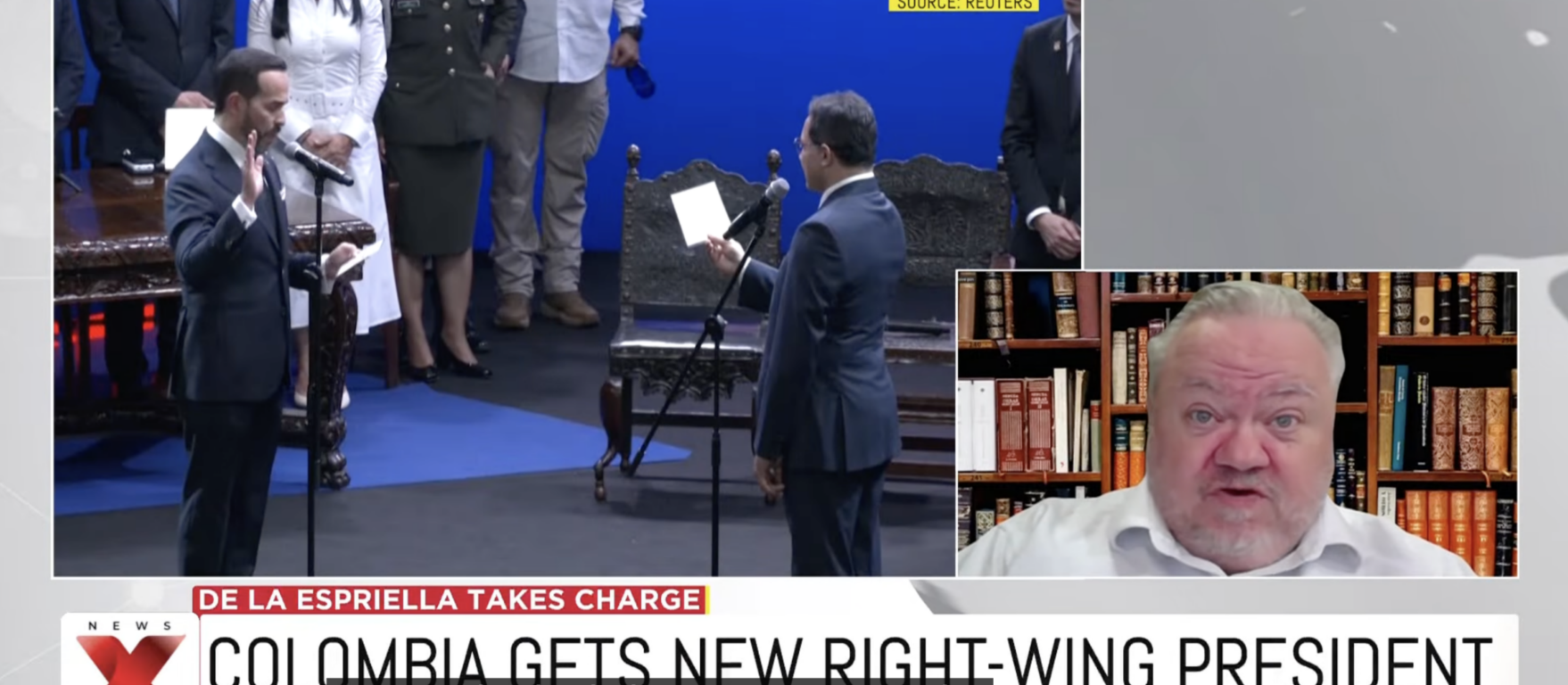
Vadum also discussed Colombia, saying the South American country just turned the page on four years of leftist failure. Conservative Abelardo de la Espriella was just sworn as president, and the Trump administration is already putting real money behind him — a planned $1 billion security assistance package.
Vadum also mentioned the radical former president, Gustavo Petro, who was associated with Marxist terrorist groups.
Watch: