

The Supreme Court on Oct. 31 denied a request from adult entertainment providers to halt a federal appeals court ruling that rejected their challenge to zoning restrictions in New York City.
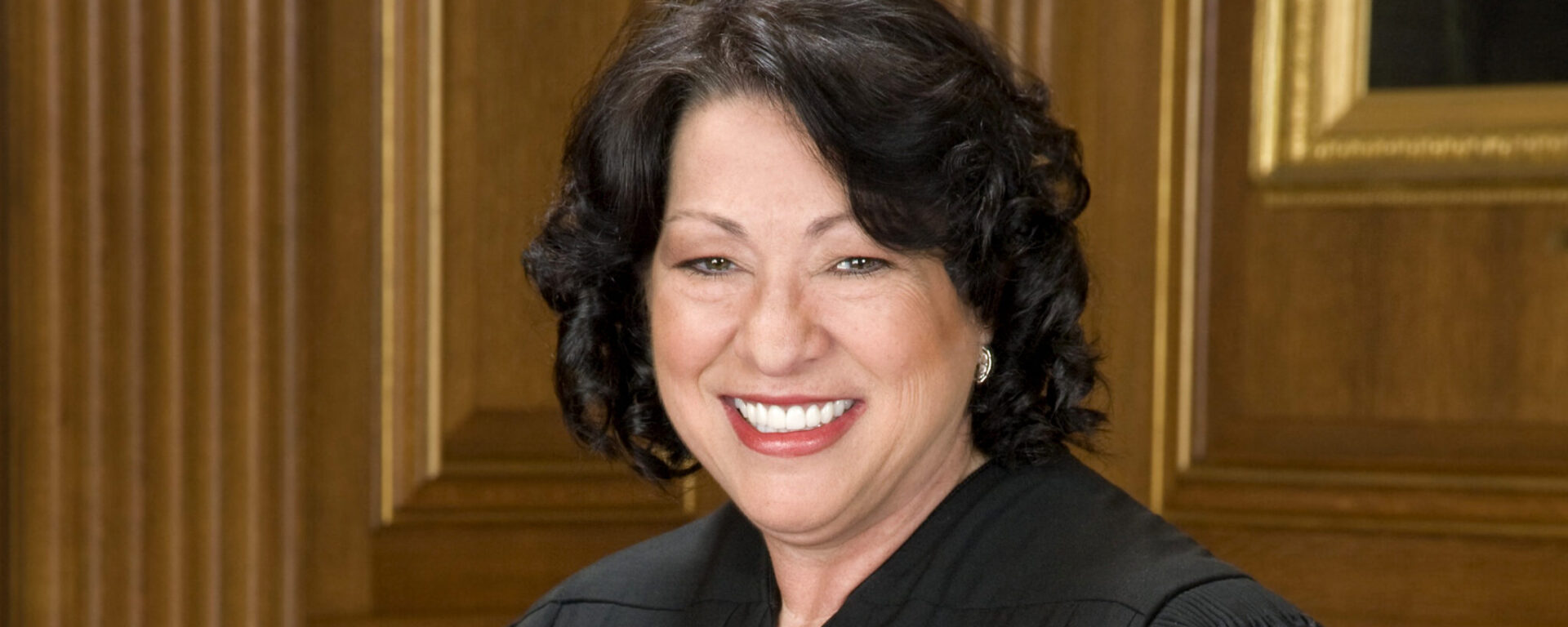
Justice Sonia Sotomayor, who oversees emergency appeals from New York state, issued a brief order in 59 Murray Enterprises Inc. v. City of New York without comment. The order rejected a request to grant an injunction blocking a ruling of the U.S. Court of Appeals for the Second Circuit.
Because Sotomayor acted alone without referring the emergency application to the full court, the companies that brought the application may present the application to another justice.
Often in emergency applications, the high court asks the responding party to file a brief outlining its position. In this case, Sotomayor made no such request.
In 1995, New York City approved new zoning laws that restricted where adult entertainment-related businesses could operate. The regulations did not govern so-called 60/40 establishments in which less than 40 percent of floor space or the store’s stock-in-trade did not feature adult entertainment or media, according to the application filed with the nation’s highest court on Oct. 22.
The businesses that brought the Supreme Court application are involved in adult entertainment. Eight of the companies operate or lease space to strip clubs and topless bars, and the other six rent out or sell adult books and videos.
The companies involved in this litigation were not affected by the 1995 regulations, but in 2001, the city changed its zoning laws to take away the 60/40 rule, which brought the companies within reach of the laws restricting adult establishments, the application said.
The new zoning amendments were not immediately enforced, but years later, when the city began to take steps to enforce them, the businesses sued. A federal district court ruled for the city in 2024, holding that the 2001 zoning amendments did not infringe on the businesses’ constitutional rights.
The businesses appealed, arguing that the amendments ran afoul of the free speech clause of the First Amendment and the equal protection clause of the 14th Amendment. The bookstores involved in the legal challenge argued that the 2001 zoning amendments violated the due process clause of the 14th Amendment, the application said.
The Second Circuit ruled in July this year that the 2001 zoning amendments did not violate the companies’ First Amendment rights.
Although the First Amendment safeguards adult expression, it also permits a municipality to regulate adult entertainment providers and, as part of a municipality’s zoning authority, allows a municipality to forbid adult businesses from operating in certain locations, the application said, citing the ruling.
“Even in areas where adult-oriented businesses are allowed, a city may prohibit such businesses from operating close to churches, parks, schools, residential areas, or other adult establishments,” the circuit court said, citing City of Renton v. Playtime Theatres Inc., a 1986 Supreme Court case.
A municipality may regulate adult establishments in an effort to mitigate the harmful “secondary effects” that can accompany adult-oriented businesses, such as “crime, decreased property values, and urban decay,” provided that such regulation is not used “as a pretext for suppressing expression.”
Where adult businesses are allowed to operate may be limited to “preserve the quality of life in the community at large,” which is “the essence of zoning,” the court said.
The application argued that the Supreme Court should grant the injunction because without it, the city could shut down businesses engaged in constitutionally protected expression and because this would cause those businesses “irreparable and substantial injury,” the application said.
The application also said that the applicants intend to file a petition for certiorari, or review, of the Second Circuit’s ruling separately from the application.
The applicants’ attorney, Edward Rudofsky of Melville, New York, commented on the denial of the application.
“We respect but are naturally disappointed by the denial of our clients’ application for an injunction pending their petition for a writ of certiorari, which we thought was warranted for all of the reasons set forth in our papers,” Rudofsky told The Epoch Times.
The Law Department of New York City did not respond to a request for comment.
This article by Matthew Vadum appeared Nov. 2, 2025, in The Epoch Times. It was updated Nov. 3, 2025.
Photo: Official Portrait of Justice Sonia Sotomayor