
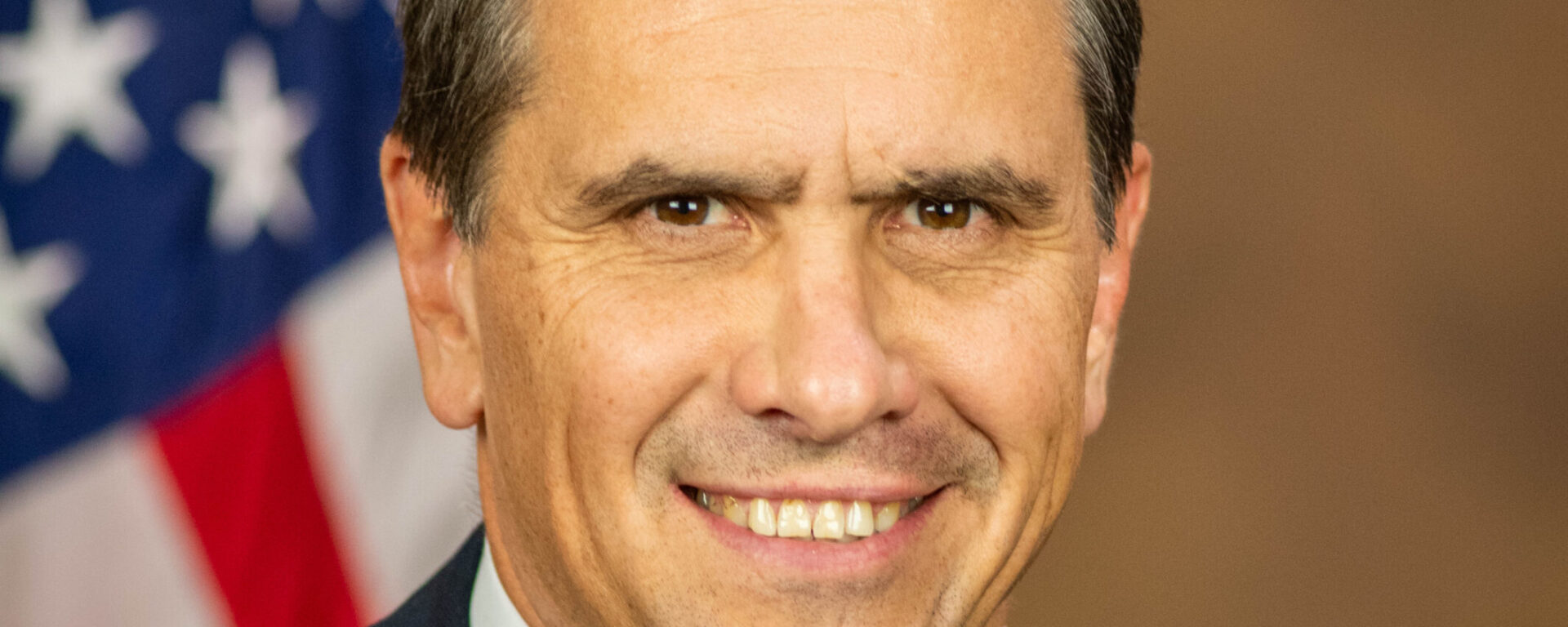

Acting U.S. Attorney General Todd Blanche asked a federal judge to reverse his own block and allow construction on the White House ballroom to continue, arguing the project would help assure the safety of the first family and White House employees.
The filing with the U.S. District Court for the District of Columbia came late on the evening of April 27 after the April 25 shooting at the White House Correspondents’ Association dinner at the Washington Hilton Hotel.
The shooting suspect, Cole Tomas Allen, was arraigned in federal district court in Washington on April 27. Allen is charged with attempting to assassinate the president of the United States, transportation of firearms and ammunition with intent to commit a felony, and discharge of a firearm during a crime of violence.
Construction on the project, which calls for building a 90,000-square-foot ballroom, began in September 2025. To build it, required demolishing of the East Wing, which President Donald Trump said was too small and in poor shape.
The project is expected to cost about $400 million, all of which is expected to be funded by private donors, including Trump. The Trump administration released a list of the private donors in October 2025. The project was expected to be completed by 2028. The National Capital Planning Commission approved the project on April 2.
The construction also includes national security-related facilities, primarily underground, including for presidential emergency operations.
On March 31, U.S. District Judge Richard Leon issued a preliminary injunction halting construction as the lawsuit that the National Trust for Historic Preservation in the United States filed to block the project plays out. Leon stayed the injunction for 14 days, which gave the federal government an opportunity to appeal. The National Trust argues that the president had no authority to move forward with the project under existing laws.
The National Trust is a private, charitable, educational nonprofit corporation chartered by Congress in 1949.
The U.S. Court of Appeals for the District of Columbia Circuit voted 2–1 on April 11 to temporarily let construction continue while the lawsuit plays out.
Blanche said in court papers filed April 27 that the National Trust, which sued to halt construction, is trying to stop a project “that is vital to our National Security, and the Safety of all Presidents of the United States, both current and future, their families, staff, and Cabinet members.”
The project includes bulletproof windows and glass, along with a heavy steel, drone-proof roof, he said.
“With such a facility, it would have been impossible for an attack like that which took place last Saturday evening in D.C. when an attempted assassin, armed with a shotgun, pistol, and knives, charged through a security checkpoint at the Washington Hilton in an attempt to assassinate President Donald J. Trump, First Lady Melania Trump, and members of the President’s Cabinet and senior staff, during the White House Correspondents’ Dinner.”
The court should never have blocked the project, and after the attempted assassination, “which could never have taken place in the new facilities, reasonable minds can no longer differ—the injunction must be dissolved,” he said.
The court should immediately end the injunction “and put an end to this frivolous lawsuit, which greatly endangers the lives of all Presidents, current and future.”
The Epoch Times reached out for comment to the National Trust. No reply was received by publication time.
On April 26, Blanche and Assistant U.S. Attorney General Brett A. Shumate posted a letter urging the National Trust to drop its lawsuit after the shooting.
The letter said the ballroom was needed because a venue such as the Washington Hilton was “demonstrably unsafe” for events featuring the president “because its size presents extraordinary security challenges for the Secret Service.”
“Put simply, your lawsuit puts the lives of the President, his family and his staff at grave risk.”
The letter said the government will ask the court to dissolve its injunction and dismiss the case if the group refuses to drop its suit.
Several federal lawmakers said after the shooting that they would introduce legislation to authorize the ballroom project.
Sen. Tim Sheehy (R-Minn.) said he would move for unanimous consent of “express approval for construction of a Presidential ballroom.”
Rep. Randy Fine (R-Fla.) said he would file the proposed Build the Ballroom Act, and Rep. Lauren Boebert (R-Colo.) said she and her team are in the process of drafting legislation to guarantee the project’s completion.
Aldgra Fredly and Kimberly Hayek contributed to this report.
This article by Matthew Vadum appeared April 28, 2026, in The Epoch Times.
Photo: Acting U.S. Attorney General Todd Blanche, official portrait, 2025