

The U.S. Supreme Court on Dec. 22 temporarily halted a lower court ruling requiring the company that owns the Pittsburgh Post-Gazette to change its health insurance coverage for unionized employees.
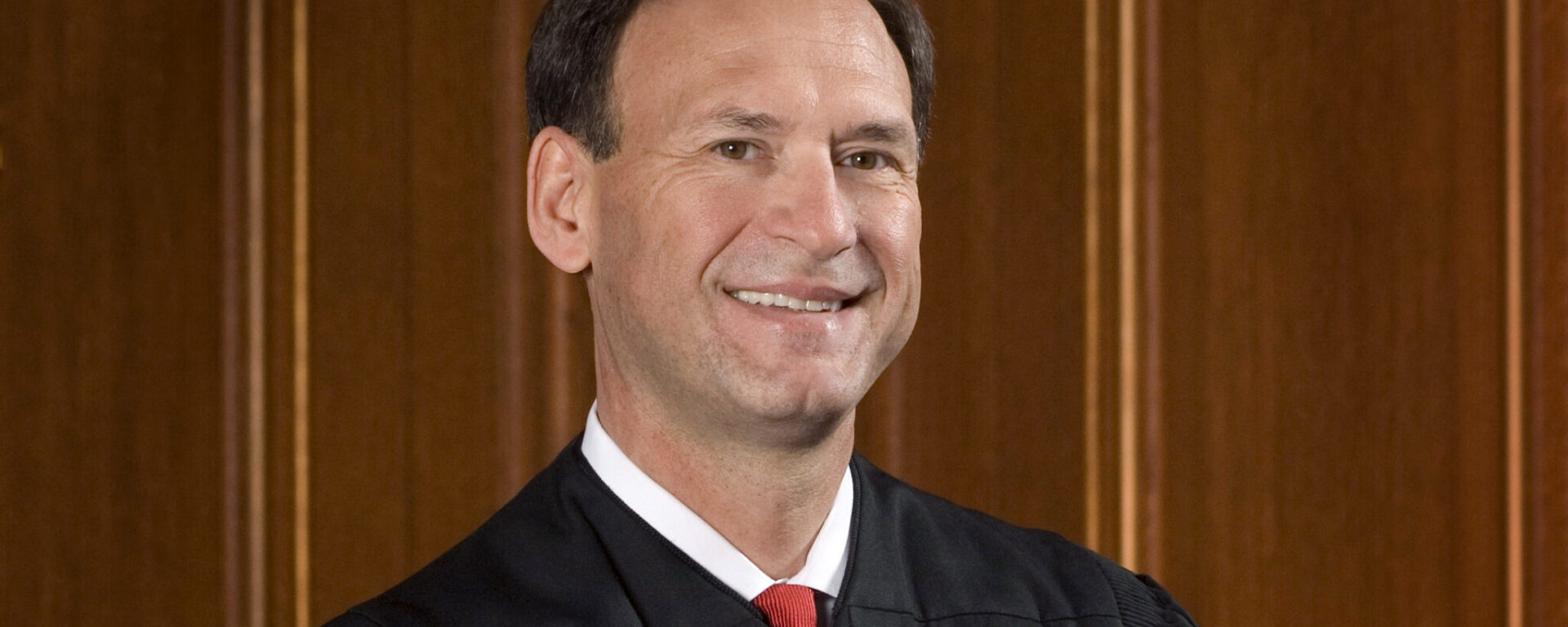
Justice Samuel Alito issued an administrative stay of a U.S. Court of Appeals for the Third Circuit injunction in the case of PG Publishing Co., Inc. v. National Labor Relations Board. Alito, who did not provide reasons for his ruling, was acting upon an emergency application filed by the company on Dec. 19.
The applicant, PG Publishing, does business as The Pittsburgh Post-Gazette, a newspaper. The lead respondent is the National Labor Relations Board (NLRB). Under the National Labor Relations Act, the NLRB hears complaints about employers allegedly engaged in unfair labor practices.
The Third Circuit’s injunction mandated that the company revert to the health insurance coverage that was in effect when a collective bargaining agreement lapsed that was between the company and the Newspaper Guild of Pittsburgh, which is Local 38061 of the Communications Workers of America.
The Guild’s three-year strike against the Pittsburgh Post-Gazette ended in November of this year.
An administrative stay gives the justices more time to consider an urgent matter. Alito ordered the NLRB and the Guild to respond to the application by 5 p.m. on Jan. 5, 2026.
On March 24, a divided motions panel of the Third Circuit issued an injunction that ordered the newspaper to rescind changes to employees’ health insurance coverage and restore the coverage provided for in the Guild’s collective bargaining agreement with the company that had expired.
The motions panel also affirmed a September 2024 ruling by the NLRB that upheld an administrative law judge’s finding that the company bargained in bad faith with the Guild.
On Nov. 10, a Third Circuit merits panel issued a ruling.
That panel noted that an administrative law judge found the company violated the National Labor Relations Act “by bargaining in bad faith, unlawfully declaring impasse, and surveilling employees in the exercise of their rights under the Act.”
Under the act, an employer may declare an “impasse” and then implement the last offer given to the labor union. The union is free to disagree that there is a true impasse and file a charge alleging the employer has engaged in an unfair labor practice by bargaining in bad faith. It is then up to the NLRB to rule whether there is a true impasse. If the board finds there is no impasse, the employer is then obligated to return to the bargaining process, according to the NLRB’s website.
The merits panel denied PG Publishing’s petition for review of the NLRB’s decision, but granted the board’s application to enforce its ruling.
In its application to the Supreme Court, the company said the ruling “presents important questions of labor law on which the Post-Gazette intends to seek certiorari,” or review, with the high court.
The application said the circuit court has ordered the company “to make immediate, significant, and irremediable changes to its employee health insurance plan—even before that judgment becomes final.”
Although the National Labor Relations Act requires “such injunctions to be ‘temporary,’ this one is anything but.”
“To comply, the newspaper will have to enter into a contractually- and statutorily-regulated health care arrangement that will far outlive this case. And its effects will be catastrophic, both economically (because it imposes crippling nonrecoverable costs) and legally (because it effectively forecloses review of [certiorari-worthy] issues).”
PG Publishing’s attorney, Chris Paolella of Reich and Paolella in New York City, told The Epoch Times his client “has no comment on this pending litigation.”
The Epoch Times reached out to the NLRB and the Guild for comment. No replies were received by publication time.
This article by Matthew Vadum appeared Dec. 23, 2025, in The Epoch Times.
Photo: Supreme Court Justice Samuel Alito