

The Supreme Court on April 27 summarily reversed a lower court ruling that blocked Texas from implementing its mid-decade redistricting of the state’s congressional map.
The high court’s decision, which means that the map will be used in elections this November, took the form of an unsigned order in Abbott v. League of United Latin American Citizens.
Justices Sonia Sotomayor, Elena Kagan, and Ketanji Brown Jackson dissented. The three justices did not explain why they disagreed with the majority.
The new ruling formalizes the Supreme Court’s interim decision from December 2025 that upheld a redrawn election map that is expected to increase Republican representation in Texas’s U.S. House delegation.
The new order states that the lower court order is being set aside “for the reasons set forth” in the December 2025 decision.
In that ruling five months ago, the Supreme Court said Texas made “a strong showing” that it would suffer irreparable harm if a federal district court’s ruling were not stayed. The district court “violated” the Supreme Court’s ruling in Republican National Committee v. Democratic National Committee (2020), which held that lower federal courts should avoid altering election rules on the eve of an election.
“The District Court inserted itself into an active primary campaign, causing much confusion and upsetting the delicate federal-state balance in elections,” the Supreme Court majority wrote.
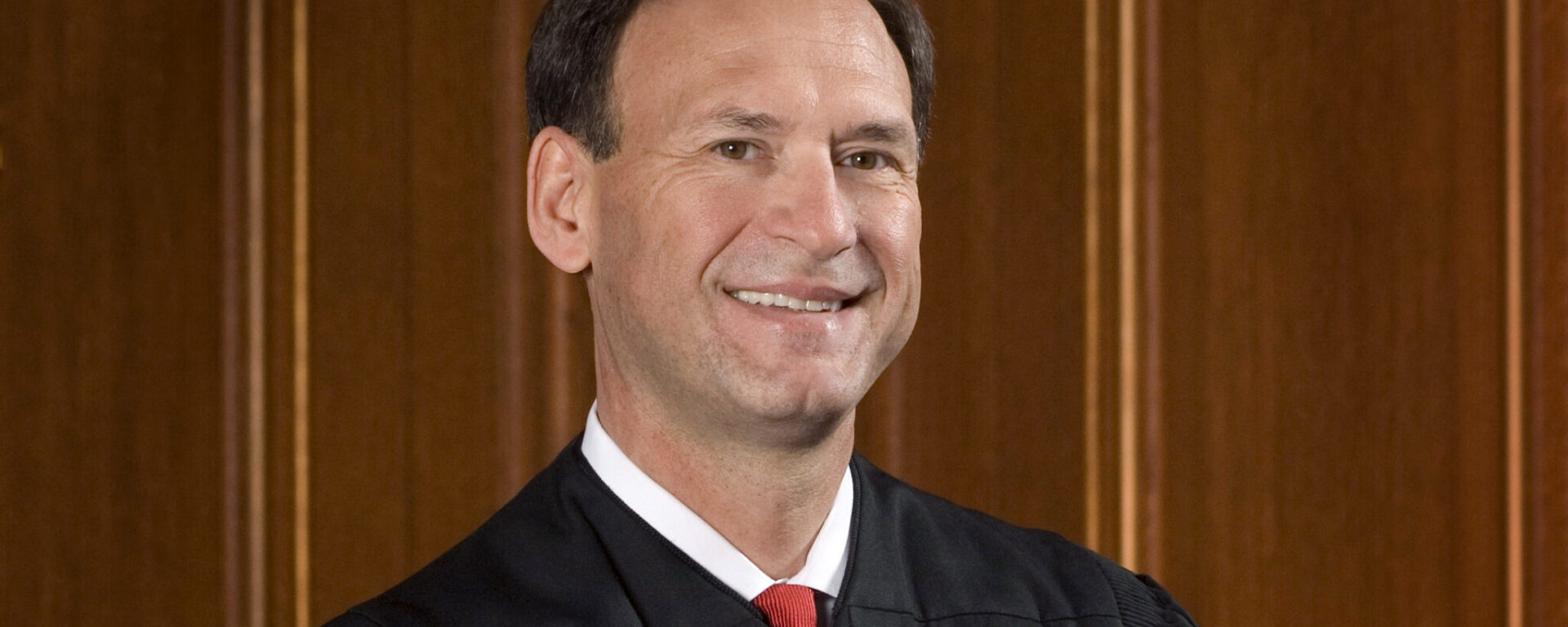
In a concurring opinion, Justice Samuel Alito wrote that “Texas needs certainty on which map will govern the 2026 midterm elections.”
“[The district court failed] to apply the correct legal standards as set out clearly in our own case law,” the justice said.
Sotomayor, Kagan, and Jackson also dissented from that ruling.
Kagan wrote that “Texas largely divided its citizens along racial lines to create its new pro-Republican House map, in violation of the Fourteenth and Fifteenth Amendments.”
“The majority today loses sight of its proper role … [and in the process] ensures that many Texas citizens, for no good reason, will be placed in electoral districts because of their race,” she wrote.
Previously, a three-judge panel of the U.S. District Court for the Western District of Texas held 2–1 on Nov. 18, 2025, that the state may not use the new map because “substantial evidence shows that Texas racially gerrymandered the 2025 Map.”
In that court’s majority opinion, Judge Jeffrey V. Brown said that groups challenging the map were “likely to prove at trial that Texas racially gerrymandered the 2025 Map.”
Gerrymandering refers to the manipulation of electoral district boundaries to benefit a particular party or constituency. The Supreme Court has previously ruled that race-based gerrymandering violates the U.S. Constitution but that redrawing district boundaries to boost partisan fortunes passes constitutional muster.
Circuit Judge Jerry E. Smith, who sat on the panel, filed a strongly worded dissenting opinion, describing the ruling as the “most blatant exercise of judicial activism” he had ever witnessed.
Texas argued in papers filed with the Supreme Court on Jan. 13 that the district court erred when it failed to honor a required legal presumption that the state Legislature acted in good faith, and failed to draw an adverse inference from the fact that those challenging the map had not presented an alternative proposed map.
The state said the district court’s ruling rests on the premise that the Republican-controlled Legislature “chose not to adopt a map that maximized achievement of political goals but instead adopted a map that sacrificed political opportunity in favor of racial discrimination, in a highly polarized political environment with a razor-thin Republican majority in the U.S. House of Representatives.”
The lead respondent, League of United Latin American Citizens, asked the Supreme Court to hold off on adjudicating the case until the evidence-gathering process known as discovery and a trial have been completed in the district court.
In the alternative, the group asked the nation’s highest court in a document filed on March 19 to affirm the preliminary injunction blocking the map that the district court issued.
Thomas A. Saenz, president and general counsel for the Mexican American Legal Defense and Educational Fund, which represents the lead respondent, reacted to the Supreme Court’s latest ruling.
“Today’s Supreme Court decision on the preliminary injunction on the Texas mid-decade redistricting was expected and has no practical impact because the 2026 elections were already going forward using these bad lines,” he told The Epoch Times.
Saenz said his organization “looks forward to further work to challenge this unconstitutional map in the future.”
Texas Attorney General Ken Paxton did not respond by publication time to a request for comment.
This article by Matthew Vadum appeared April 27, 2026, in The Epoch Times.
Photo: Supreme Court Justice Samuel Alito