

A commentator says the Hawaii Supreme Court has once again issued a ruling that defiantly rejects at least the spirit of binding, nationwide precedent that has been handed down by the U.S. Supreme Court.
Carrie Severino of JCN (a.k.a. Judicial Crisis Network) has a July 17, 2026 piece at National Review entitled “Hawaii Justices’ Stunning Screed Against the U.S. Supreme Court.”
She writes that the state court published a “meandering, nine-page broadside against the U.S. Supreme Court” within a run-of-the-mill post-conviction opinion.
Suddenly, the state court majority pivoted to “airing its grievances” with the nation’s highest court in a dressing-down worth reading “if only to marvel at the scope and arrogance of the digression, spanning voting rights, campaign finance, abortion, religious liberty, the Second Amendment, the major questions doctrine, Chevron deference, the spending power, the removal power, and birthright citizenship.”
The state justices accused the apex court of dishonoring Brown v. Board of Education (1954), resurrecting the jurisprudence of Dred Scott v. Sanford (1857), and Plessy v. Ferguson (1896). The state court accuses “today’s hubristic originalists” of using constitutional construction “to control modern life,” and says the high court “overrides what Congress passed” and “overrides what the people chose. All to serve its own ends.”
It’s a fascinating read.
The Hawaii Supreme Court’s ruling came after the U.S. Supreme Court voted 6–3 on June 25 to strike down a Hawaii gun law that banned residents from carrying concealed weapons in privately owned public places, such as gas stations and shopping malls, without permission from the owners.
The majority opinion in Wolford v. Lopez was authored by Justice Samuel Alito.
Justices Elena Kagan, Ketanji Brown Jackson, and Sonia Sotomayor dissented in the case, which was closely watched both by gun rights and gun control advocates.
Alito said the Second Amendment “has the same meaning in all parts of the United States.”
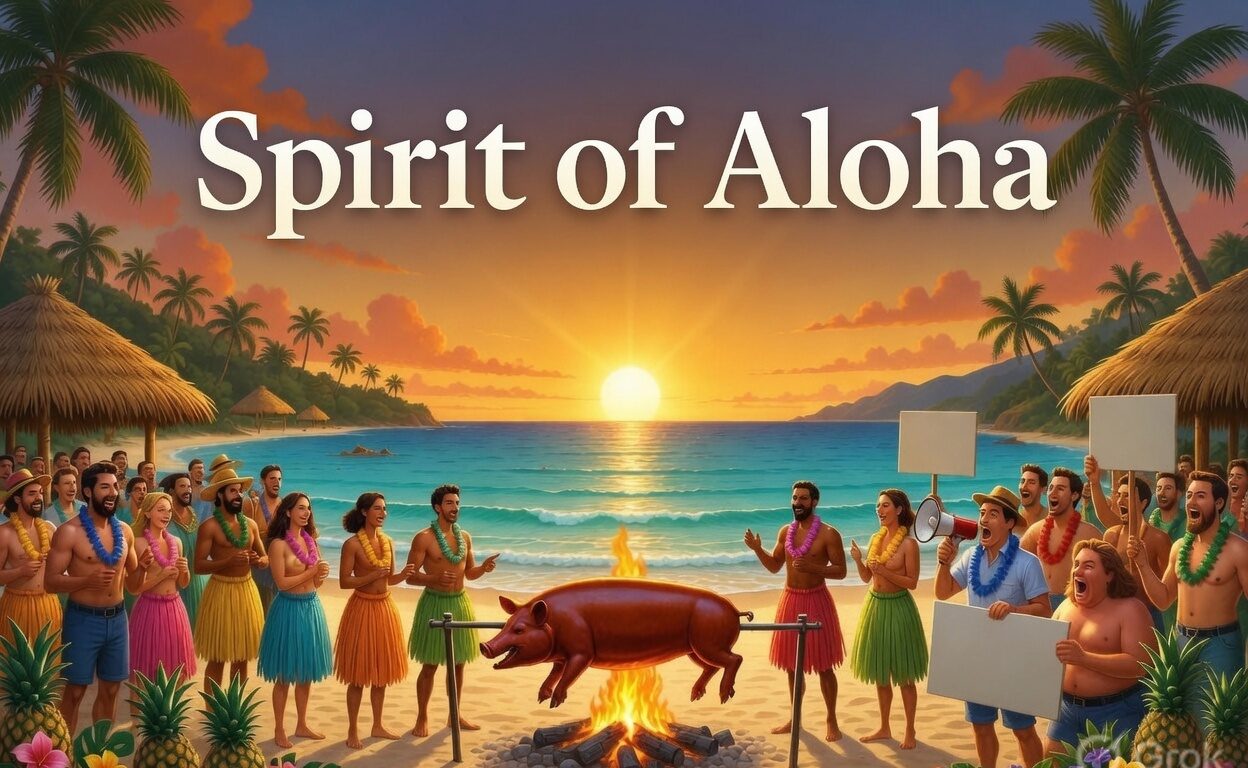
“It cannot give way to ‘the spirit of Aloha’ in Hawaii … any more than it can yield to the spirit of the Big Apple … or the Windy City,” he said.
“It applies in the same way to our 50th State (where about 8 [percent] of adults possess guns) and our 49th State (where the figure is roughly 59 [percent]).
“Merely local attitudes can neither shrink nor inflate the meaning of fundamental Bill of Rights guarantees that apply to the States through the Fourteenth Amendment.”
Over the years, the court has invoked the so-called doctrine of incorporation to apply the constitutional protections of the Bill of Rights—the first 10 amendments to the Constitution—to the states. Initially, the Bill of Rights was understood to apply only to the federal government.
Alito said the state law “departs sharply from the standard common-law rule on access to private property held open to the public,” under which everyone, including lawful carriers of firearms, may enter unless specifically forbidden to do so.
The Hawaii statute “hobbles what the Second Amendment protects,” preventing everyone from carrying a gun without express consent by the property owner, while it imposes “severe restrictions on the daily activities of residents who have satisfied the State’s rigorous requirements for the issuance of a carry permit.”
“When these permit holders leave home in the morning, not only must they take care to avoid all the territory where the possession of a gun is prohibited outright, but they may also be barred from entering many places that people routinely visit,” Alito said.
Justice Amy Coney Barrett filed a concurring opinion, saying that according to Hawaii’s logic, if a state made it a crime to wear religious head garb, such as a hijab, on private property open to the public, that law could “evade constitutional scrutiny” because the state “has merely adjusted the default to require permission to be clear.”
That is “plainly wrong,” she said.
“Property laws, no less than other laws, are subject to constitutional limits. So when a property law ‘restrict[s]’ the bearing of arms, the State must prove that the law abides by the limits of the Second Amendment,” Barrett said.
In her dissenting opinion, Justice Ketanji Brown Jackson said the majority held that the Hawaii law “is a blatant attempt to end-run our Second Amendment precedents.
“But the statute at issue does no such thing. Instead, it fairly applies a first principle of property law—the right to exclude—and does no harm to the Second Amendment.”
With this new decision, the Supreme Court “has now manipulated Bruen into a free-for-all that lets the Judiciary thwart the will of legislatures by privileging access to firearms above all else. Today’s decision makes one thing clear: The Court’s objective is protecting guns, not consistently preserving any principle of law.”
Jackson was referencing New York State Rifle and Pistol Association v. Bruen (2022), which held that the Second Amendment protects the right to carry firearms in public for self-defense.
Hawaii’s Act 52 banned handguns on private property unless the permit holder had received “express authorization to carry a firearm on the property by the owner, lessee, operator, or manager of the property.”
It also banned firearms in bars, beaches, parks, and “sensitive places” such as hospitals, schools, and government buildings.
The law placed the onus on private property owners who wish to allow concealed carry on their property to communicate their policy to the public.
Interestingly, Hawaiian law defines “Aloha Spirit” as “the coordination of mind and heart within each person. It brings each person to the self. Each person must think and emote good feelings to others. In the contemplation and presence of the life force, ‘Aloha’, the following unuhi laula loa may be used.”
It defines “Akahai” as “kindness to be expressed with tenderness,” and a series of other Hawaii-specific concepts — Lokahi, Oluolu, Haahaa, and Ahonui.
Will the U.S. Supreme Court disallow the Hawaii Supreme Court’s ruling, or will the Spirit of Aloha prevail?
Time will tell.